
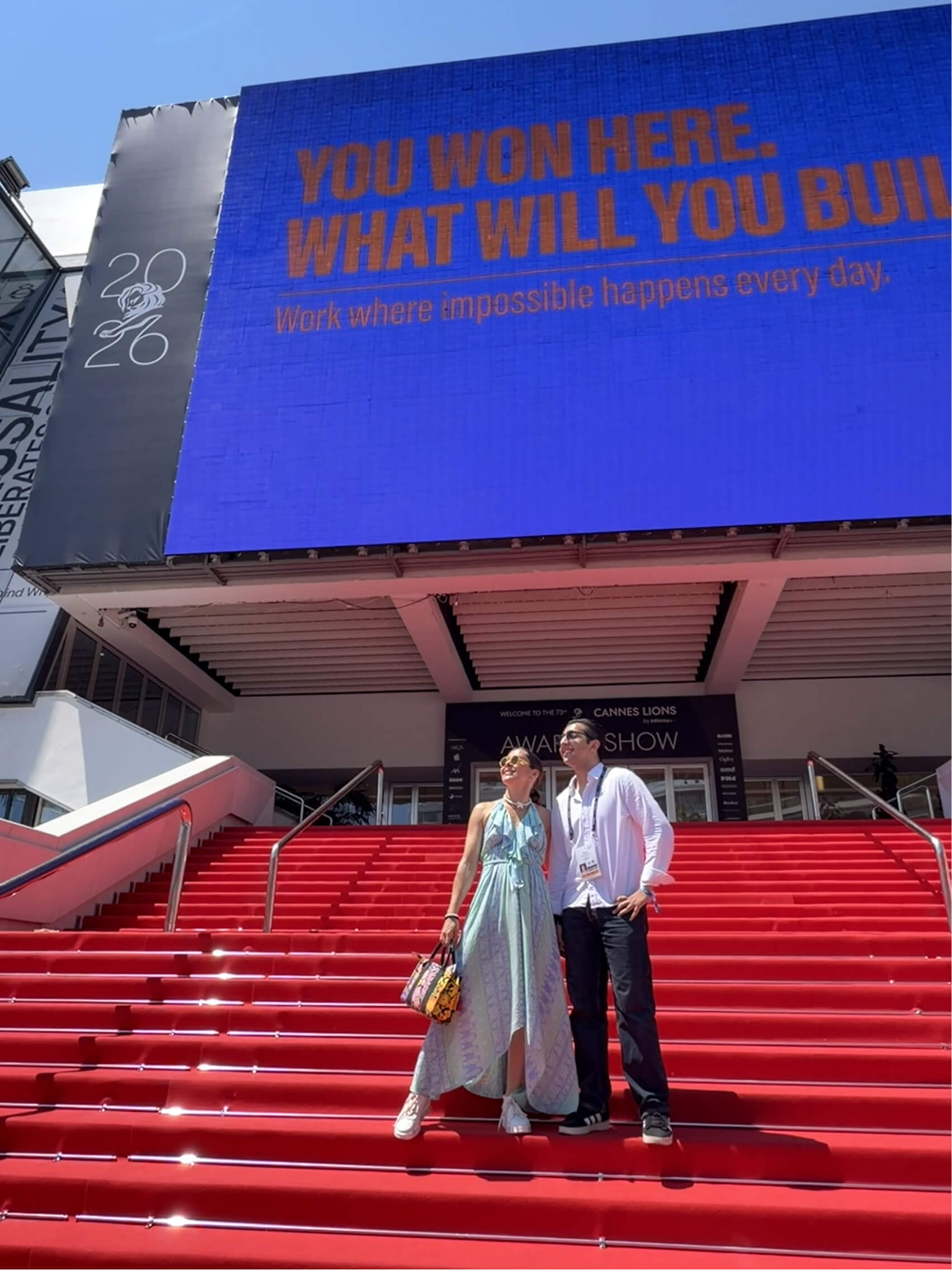
Cannes Lions has been the advertising industry's north star for seven decades, long before the creator economy even existed. In 2024, Cannes finally made room for creators. It wasn't much: a rooftop slot on the Palais, easy to miss, and marketers still ran the agenda. This year that changed. The conversations that used to happen about creators started happening with them, and their side events were everywhere.
The traditional side of the festival still made headlines — Business Insider named its 25 most innovative CMOs of 2026 during the week. But next to the Palais, on the beach, a different festival was running, with more than 200 creators on site.
AIR's team just got back from Cannes. Here's what we saw.
Every Platform Showed Up With Something New
YouTube used its Cannes platform to announce a set of new insights tools built with Gemini, aimed at brands and agencies navigating what it's calling the new era of creator marketing.
Here's what's changing:
- Trend data gets sharper. Google Ads Insights Finder picks up finer-grained US trend tracking, so brands can see what's catching on before it peaks.
- Two reports become one screen. Instead of checking Brand Pulse separately, brands can now see paid and organic YouTube performance side by side inside Insights Finder.
- Agencies get an API. A new Content & Creator Insights API opens up creator and audience data programmatically, aimed at making media planning less of a guessing game.
- Gemini starts grading your visuals. A coming feature will have Gemini review Demand Gen campaigns and flag which creative is likely to underperform before it goes live.
This wasn't the only platform update to land in June. We rounded up everything else, from a new subscriber milestone award to search profile changes, in our June 2026 trending roundup.
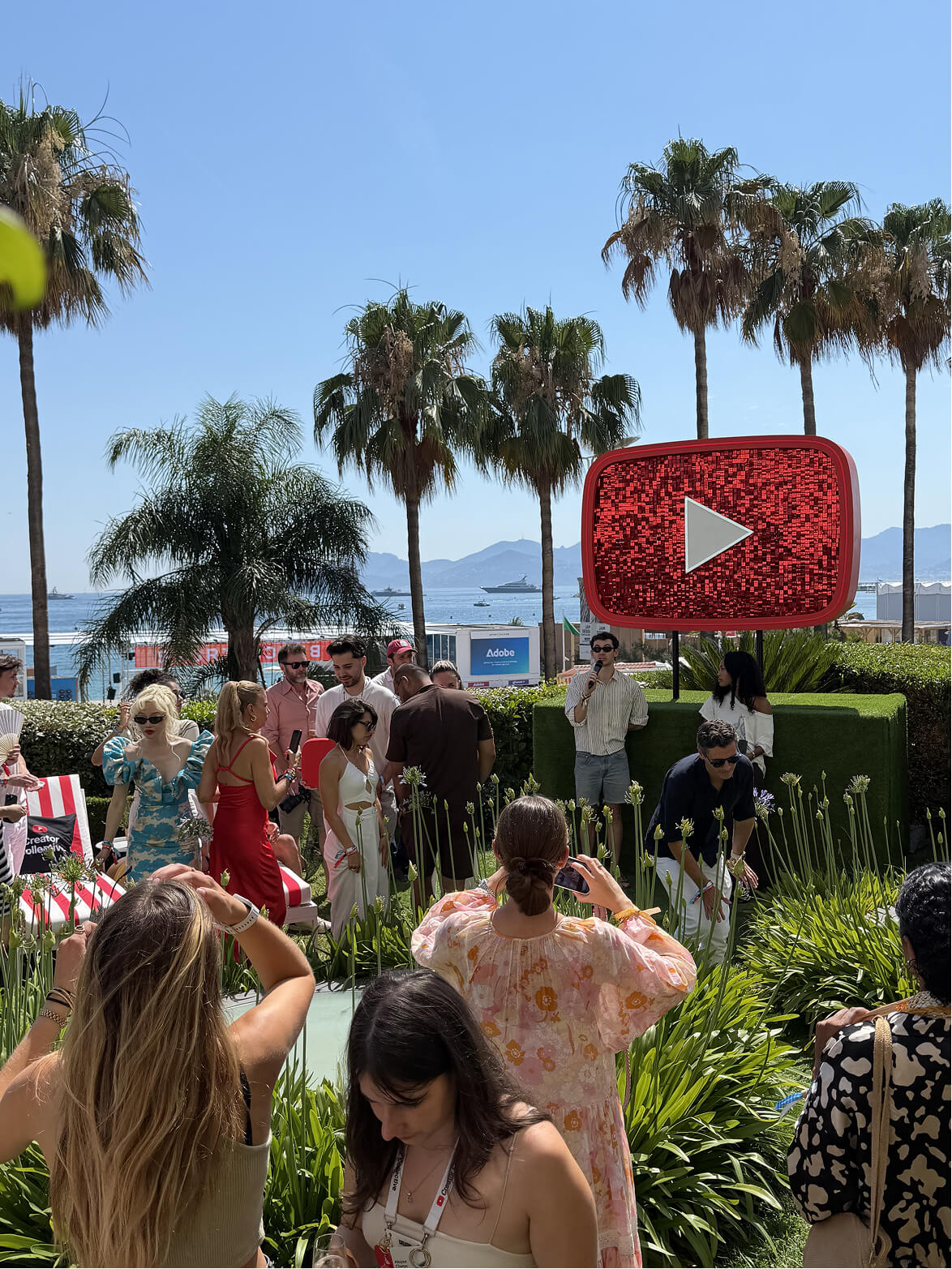
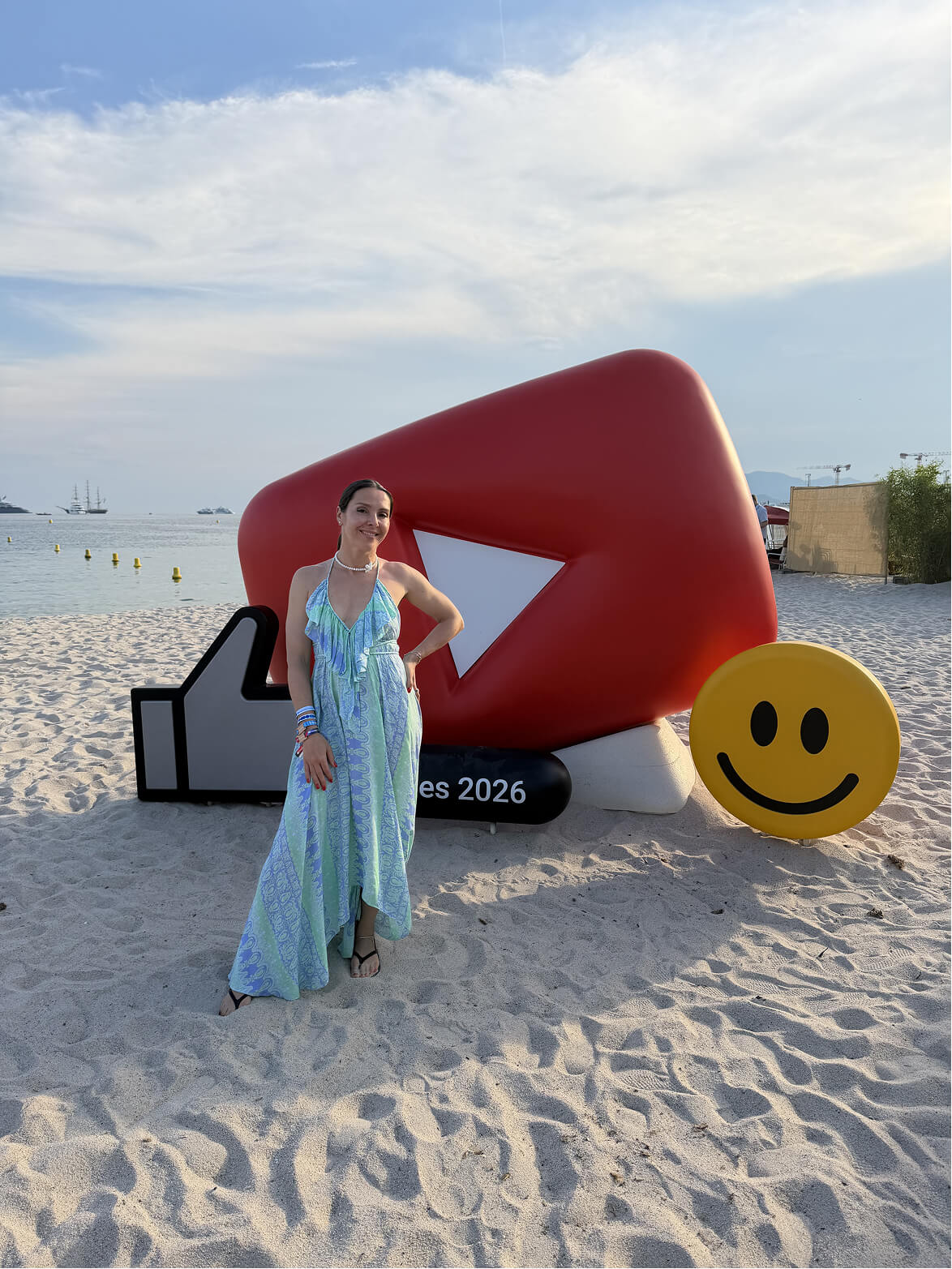
Every major platform showed up with a beachfront activation and product news to match: the YouTube Drive-In and YouTube Creator Club, TikTok's Carlton Garden, Meta &Spotify Beaches, the Reddit Community Deli, among others.
Three announcements stood out.
- TikTok launched Symphony Agent, an agentic AI tool that builds video ad campaigns from text prompts and image inputs, powered by ByteDance's Seedance 2.0 model, along with a Custom Creator Networks feature.
- Meta folded its creator marketplace and partnership ads hub into one Creator Marketing Hub and started testing horizontal video on Instagram, alongside exclusive demos of its Kylie Jenner--branded Meta glasses.
- And LinkedIn rolled out creator collaboration tools.
AI Got Quieter
Last year, Cannes ran on bold AI predictions. This year, the tone shifted toward what AI can't do yet. EY CMO John Rudaizky said AI still gives an illusion of accuracy it hasn't earned, which is why he's not sold on it for synthetic market research testing.
A Havas study released during the week, based on more than 2,400 brands and 1,000 consumer interviews, found 84% of brands struggle to make consumers care about them at all, and Havas' Mark Sinnock argued creativity, not automation, is what builds connection.
"The same thing kept coming up in every room I sat in," said Vira Slyvinska, head of Global Business Development at AIR Media-Tech. "AI doesn't have taste, and it can't fake a lived experience. But the real issue is trust. When it comes to gen-AI content, audiences spot AI fast, and once they do, they often stop believing you."
OpenAI's own Cannes debut backed up the mood. Instead of the flashy activations tech giants usually bring, OpenAI set up 15 minutes from the main action to pitch its ChatGPT ads business and Codex agent. Ad solutions lead Dave Dugan told Business Insider's Lara O'Reilly, in the Cannes Diary newsletter, the rollout has been deliberately slow, with ad load kept moderate while the company studies whether ads change how often people ask questions. "Four months in, we've gotten more confidence about how we can deliver volume," he said.
AI can generate a month of content in an afternoon. When every feed is full of output that fast to produce, Forbes' Taylor Reilly argued, the thing left that can't be automated is showing up in person. That's the actual reason creators flew across the world for a festival when most brand deals close over email regardless.
Lived Experience is the One Thing AI Can't Copy
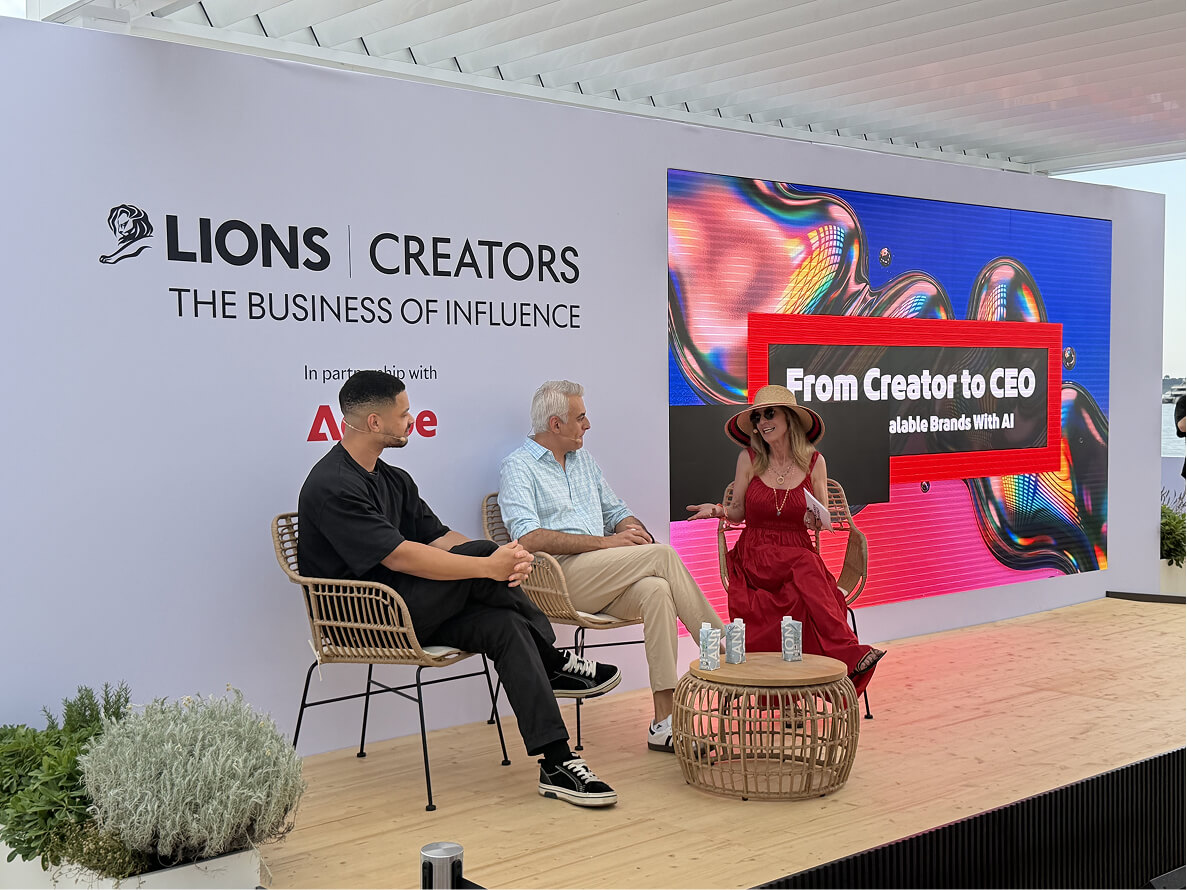
Steven Bartlett's Creator Beach talk, covered by Brett Dashevsky (Creator and marketing consultant, who hosted Creator Beach for the week), landed on a point that came up in nearly every AI conversation at the festival: once every creator has access to the same tools, the only scarce resource left is the creator's own lived experience. AI speeds up editing and ideation, but it can't manufacture a specific life, and audiences can tell the difference between generated content and content that came from something real.
That's also, roughly, what Antoni Porowski told a packed BI suite when he pushed back on the word "taste," calling it vague, and argued creators and brands should be chasing specificity instead. When brands push back on his ideas, his answer is simple: ask for a Zoom and talk it through, rather than default to the brand's version.
Live Content is Winning the Trust Argument
Twitch CEO Dan Clancy's session with creator Mary Kish, per Brett Dashevsky's recap, centered on a different fix for AI skepticism: live content.
Younger audiences already distrust whether what they're watching is real, and that skepticism grows every time AI-generated content gets more convincing. A livestream is one of the few formats that's hard to fake. Twitch's own average watch time, 72 minutes, backs up the appeal. For brands still planning around impressions, the argument is to plan around moments instead, since the clips that travel are the ones that happened live.
Brands are Learning to Let Go of the Brief
The clearest tactical thread from Creator Beach is that brands that hand creators a rigid script get worse results than brands that hand them a problem to solve.
At Business Insider's CMO breakfast, YouTuber Adam Waheed (Adam W) and Google's Sean Downey walked through what that looks like in practice. Downey, who runs Google and YouTube advertising in the Americas, said the creator process has changed fundamentally in the past four or five years, with brands now running experiments instead of handing over a script. Waheed said the best partnerships work because both sides give something up: the brand doesn't get its script followed exactly, and the creator doesn't get total creative freedom either. "It's meeting in the middle," he said.
Dashevsky pulled the same idea into a repeatable framework: the "Superpower Brief." Find what the creator does that nobody else does, find what the brand offers that nobody else can, and build the brief from the overlap. Brands that start there get both media results and cultural traction, he said; brands that skip it get media results only, and usually pay more for less.
One Sponsored Post is The Worst Deal in The Room
Also from Dashevsky's Creator Beach sessions: the math on one-off brand deals doesn't work for either side.
A single sponsored post rarely builds enough trust to justify the effort of landing it, and creators increasingly know it. Four brand deals spread across a year consistently beat four one-off posts, because an audience seeing a brand show up repeatedly builds a different kind of trust than a single placement ever can.
The implication for anyone still buying one-off posts: you're paying full price for a partial result. Retainers and longer arrangements were the recurring ask from creators on stage all week.
Niche is Out, Expertise is In
Cultural strategist Rachel Lowenstein, who's consulted for Nike and Dove, pushed back on the industry's favorite piece of creator advice at Cannes this year: niche down.
The Publish Press reported that Lowenstein argued niching down boxes creators in, while expertise lets them stay expansive with a specialized level of knowledge. Her own example is female fandom culture, a subject broad enough to cover a lot of ground while still being something she's known for.
The same logic applies to pitching brands. Lowenstein said that very few creators get curious about a brand's business problems before pitching them, and the ones who do walk in as a thought partner instead of a vendor.
Somebody Finally Mapped the Whole Podcast Ecosystem
Audio industry group Sounds Profitable used Cannes week to preview The Podcast Atlas, a study built on more than 5,000 US consumers that maps how audiences move between audio, video, clips, social platforms, and newsletters. The headline numbers, covered by Net Influencer:
- 73% of listeners say they'd follow a host from audio into video
- And 71% would follow that same host from long-form into short clips.
Audio still wins on trust, but video converts that trust into action at a higher rate, including on purchases made right after hearing an ad.
Audience loyalty is following the person, not the platform or the format. A single podcast host now represents five separate distribution surfaces, and treating any one of them in isolation leaves reach on the table.
What This Means if You're a Creator or a Brand Right Now
Put the threads together, and a few things are true at once.
- Brands are finally willing to hand creators real creative control, but only the ones who can prove a specific point of view.
- One-off deals are getting harder to justify on both sides of the table, which means the creators pitching retainers right now are ahead of the ones still pitching single posts.
- Live, verifiable formats are picking up trust that AI-generated content is actively losing.
- And audience loyalty is tracking the creator across every format they touch, audio to video to clips, not staying loyal to any single platform.
Not sure what your next step should be?
We're not just watching these trends from the sidelines — our team tracks how they play out across 3,000+ channels we work with, so we know which ones hold up and which ones are hype. If you want that read on your own channel, our specialists will look at it from 10 angles using 21 AI diagnostic tools and hand you a step-by-step plan.