


We often see small YouTube channels hit a plateau that feels impossible to shake. This was the situation for one of our entertainment channels (11,000 subscribers). They have built their initial community, but their reach was hitting a ceiling.
To break that wall, we focused on strategic optimization and aggressive vertical expansion that led to the 268% growth in views in a single quarter.
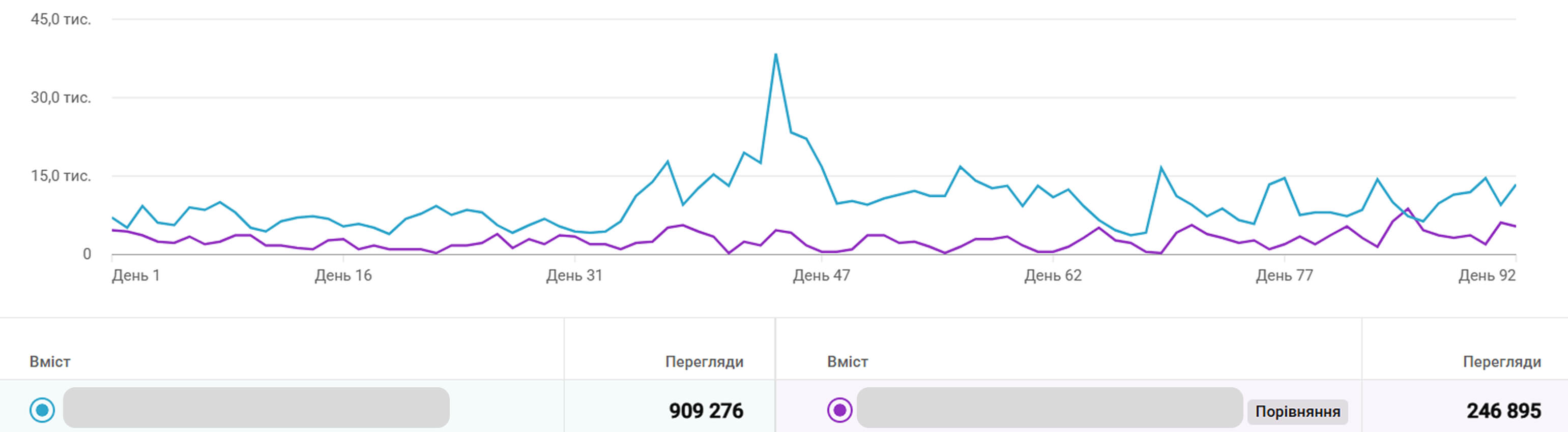
The outcome speaks for itself. Here's how it happened.
The Starting Point: Steady Content, Stalled Growth
This channel is a Canadian media project. They served a loyal community, posted regularly, and created meaningful content. Despite that, numbers stayed flat.
This is a pattern we’ve seen with hundreds of creators, and we decided to do the review to see where opportunities had been left untouched.
The Intervention: A Targeted Rebuild
Our team of experts dissected the channel. Every video, thumbnail, and metadata string. We reviewed watch behavior, CTR decline curves, and drop-off points.
We worked side-by-side with the creator to rebuild the title and thumbnail. Fonts became clearer. Images started conveying emotion and context. Titles started solving for intent and timing. CTR improved as the updates rolled out across new and old videos.
Once thumbnails and titles improved, retention had a better chance. But we didn’t stop at visual cues.
The Accelerator: Shorts Done Right and at Scale
They had published Shorts before, but there was no Shorts strategy. And that changed quickly.
We worked with their team to define strong vertical pillars: cultural commentary, guest highlights, reactions, and fast edits from long-form interviews. With the VidIQ tool, we identified rising topics with weak competition and helped the team batch Shorts around those spaces.
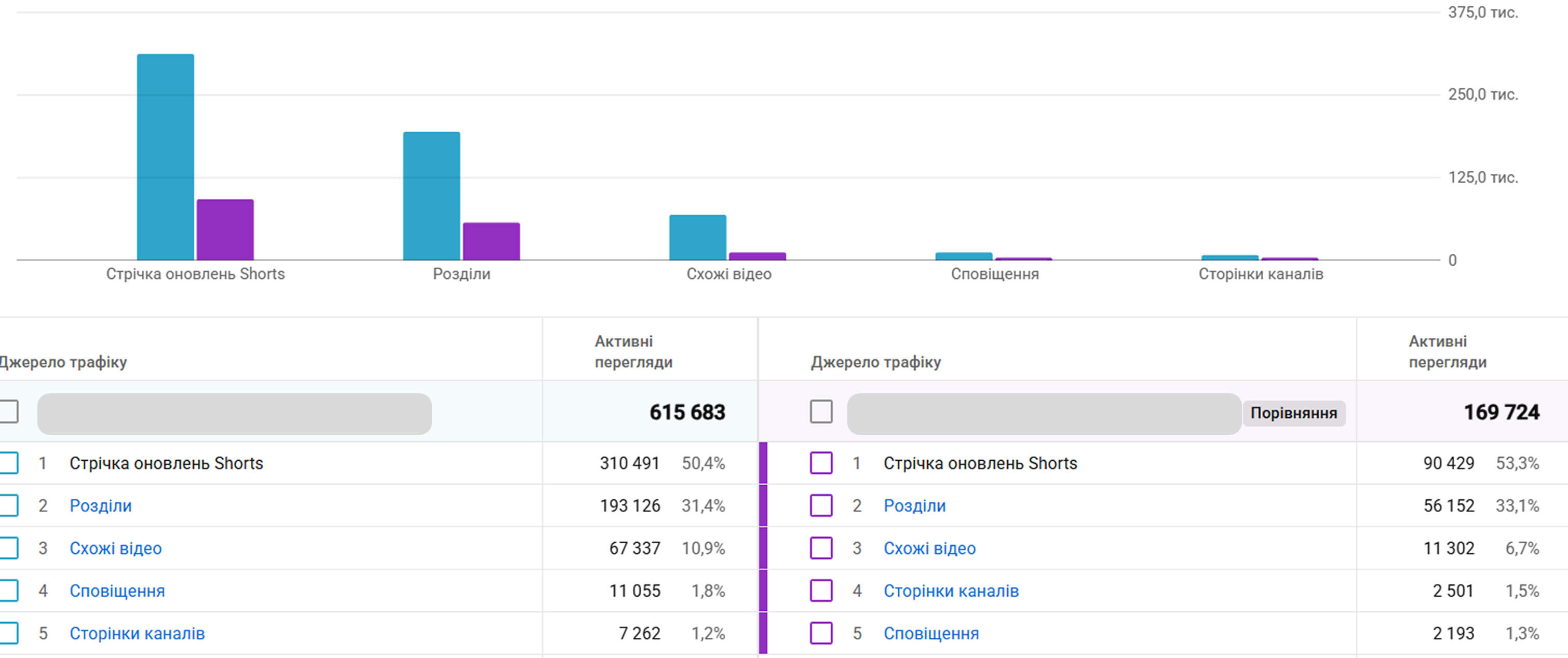
Publishing frequency increased by over 100%. Instead of occasional Shorts, they reached a stable cadence that let the algorithm test multiple videos per week. Within one quarter, traffic from Shorts rose from 169,724 views to 615,683, a 263% increase.
That number is important to read correctly. Shorts were not replacing long-form performance. They were feeding it. New viewers discovered the channel through Shorts, then stayed for long-form content. That is why watch time grew 624% even as Shorts (which carry low individual watch time) dominated the view count.
It was a structured expansion, backed by data and guided content angles.
The Blocker: Copyright Signals Cleanup
Channels operating across multiple countries often carry hidden risks. This channel triggered YouTube’s copyright detection systems, just enough for the algorithm to slow down recommendations.
We flagged these risks, and our safety team guided the creator on how to fix this. As risk declined, we saw corresponding gains in visibility.
- Back-catalog videos picked up traction again.
- YouTube’s suggested system began to trust the channel more.
- Views from related content sections improved, and visibility in browse features recovered.
This part of the strategy rarely gets mentioned. But for many creators, it's one of the biggest invisible performance killers.
The Operational Fix: Publishing Structure
The channel needed a release system tied to audience behavior and YouTube’s discovery mechanics.
We helped implement a weekly plan across both long-form and Shorts. Each content batch followed internal deadlines. Upload times were mapped to viewer peaks. Shorts supported themes from long-form videos, building topic cohesion.
In total, 176 new videos were published over the quarter. That represented a +111% increase in publishing. But the real impact came from consistency and rhythm.
With the right posting rhythms, YouTube had more chances to test the content. That testing led to more suggestions, more watch time, and more sessions per user. Watch time doubled, supporting both monetization and reach.
The Results in 90 Days
In one quarter:
- +268% total views (246,895 → 909,276)
- +624% watch time (4,887 → 35,372 hours)
- +263% Shorts views (169,724 → 615,683)
- +111% publishing volume (176 additional videos)
- Revenue grew 55% month-over-month in the two months following the intervention
Compared to the same quarter the previous year, total views grew +1,124% (from 50,282 to 615,683).
Want to find what is holding your channel back?
We'll run the audit, map the friction points, and help you build the structure your content deserves. Contact us to get started.
How Small Channels Can Replicate This
The four levers above are not exclusive to this channel. They apply to any small creator who has real content but stalled distribution. Here is how to approach each one yourself.
1. Audit Your Packaging Before You Touch Anything Else
Most creators underestimate how quickly thumbnails go stale. A design that worked six months ago may have become invisible in a more crowded feed. Before changing your content strategy, diagnose your packaging first.
- Check your CTR in YouTube Analytics. Under 3% means your thumbnail or title isn't pulling people in. Between 4–8% is solid. If you are below that floor, packaging is your highest-leverage fix.
- For titles, the goal is to solve for viewer intent. Curiosity gaps, specific numbers, and questions consistently outperform descriptive titles.
- For thumbnails, clarity and emotion beat detail. A face with a clear emotional expression, a readable font at small sizes, and strong contrast will outperform a busy composition. YouTube's native A/B testing tool lets you run controlled tests on real traffic. Use it on your top three underperforming videos first.
The fastest way to close the gap is a professional channel audit. Our team reviews titles, thumbnails, and metadata across the full channel and tells you specifically what to change.
2. Build a Shorts Strategy
There is a difference between having Shorts and using Shorts deliberately. Occasional uploads without content pillars, cadence, or data give the algorithm nothing to work with.
The approach that worked for this channel applies broadly:
- Define 3–4 content pillars for your Shorts. These should connect to your long-form themes but work independently as standalone clips.
- Use VidIQ to identify topics in your niche with rising search interest and low competition. Batch Shorts around those gaps rather than guessing.
- Post at a consistent frequency, because the algorithm needs volume to test. Inconsistent posting teaches YouTube nothing about your channel.
- Treat Shorts as a traffic gateway, not a revenue source. The real payoff is that Shorts viewers migrate to your long-form catalog. That is where your watch time and RPM live.
If you are starting from zero, test different frequencies — one Short per day, then three — and track which frequency drives the strongest traffic to long-form. The data will tell you where your ceiling is.
3. Check for Copyright Risk Before It Checks You
Copyright signals affect recommendation behavior even when no formal claim has been filed. YouTube's detection system is sensitive, particularly for channels using music, reaction content, news footage, or any material from third-party sources. In one of our cases, the channel recovered $5.3K just from a copyright cleanup.
For small channels, the symptoms are subtle:
- A video that should be getting recommended isn't
- Or browse impressions drop for no obvious reason
The cause is often a content signal that has put a ceiling on distribution.
The fix is a legal review before the problem compounds. You can prevent these risks with an automated tool that scans your channel daily, notifies you about potential troubles, and suggests how to fix them.
4. Structure Your Publishing
Uploading more does not automatically mean growing more. What matters is whether your publishing creates coherent signals that YouTube can act on.
A structured approach looks like this:
- Map upload times to your audience's activity peaks. YouTube takes a few hours to index a video, so uploading 2–3 hours before peak viewing time gives your content the best window for early engagement.
- Connect Shorts to long-form themes. If your long-form video covers a topic, batch two or three Shorts from that same content. This builds thematic cohesion that helps the algorithm understand who to show your content to.
- Engage in the first hour after upload. High early engagement sends the algorithm a signal that the content is worth testing further.
- Use end screens and playlists to extend session time. YouTube rewards content that starts longer watch sessions, not just individual video performance.
How to Diagnose Your YouTube Channel
Not every channel has the same problem. The right lever to pull depends on your specific situation.
- If you have decent views but low watch time: Your packaging is working, but your content is losing people early. Focus on retention: tighter intros, faster hooks, clearer structure.
- If you have strong retention but flat views: Your content is good, but discovery is broken. Packaging and Shorts are your highest priority.
- If you upload consistently, but impressions keep dropping, the algorithm has deprioritized your channel. This is often packaging fatigue, copyright signals, or a shifting audience behaviour.
- If you have engagement but no revenue growth: Your monetization structure is weak. Review your ad placement, your content length relative to mid-roll thresholds, and whether your watch time is actually converting to RPM. You can use an AI tool to make your ad breaks optimal for revenue and viewers.
If your channel is posting consistently and still not growing, the problem is almost certainly structural. We can find it.
Reach out to us. We'll map the gaps, rebuild the system, and help your content perform the way it should.

![New AI and Safety Updates on YouTube [April 2026]](https://air.io/storage/ZoAoeugm6FCf5WiHDzgXSK5dIYWROiCrD0J3oZSc.jpg "New AI and Safety Updates on YouTube [April 2026]")
