

Three upload paths exist on YouTube, and the right one depends on your goal. To store music for private listening, drag your audio files onto music.youtube.com — free, up to 100,000 songs, visible only to you. To share a track publicly, turn the audio into a video and publish it through YouTube Studio in about 15 minutes. To release officially on YouTube Music — with an artist page, royalties, and Content ID protection — deliver the track through a distributor; AIR Music does this with 0% upfront fees while artists keep 100% of their rights and masters.
As of July 2026, YouTube Music's pre-save and countdown tools are live for official releases, and content reviews for AI-heavy channels now evaluate the whole channel rather than a single video.
Which Upload Path Do You Need?
Pick by what you want the music to do — each path uses a different tool, takes a different amount of time, and unlocks different things.
|
Your goal |
Path |
What you need |
Time |
|---|---|---|---|
|
Listen to your own files across devices |
Personal library upload (music.youtube.com) |
Audio files: FLAC, M4A, MP3, OGG, or WMA |
Minutes |
|
Share a track publicly on your channel |
Video upload via YouTube Studio |
Audio file + a cover image, combined into a video |
15–30 minutes |
|
Official release: artist page, royalties, Content ID |
Distributor delivery to YouTube Music |
Mastered WAV/FLAC + square artwork + a distributor |
3–14 days |
The three sections below walk through each path in order, from simplest to most powerful. Most musicians reading this need the second and third — the second gets your music seen, the third gets it owned and paid.
How Do You Upload Music to Your Private YouTube Music Library?
Drag your audio files anywhere onto music.youtube.com on a computer, or click your profile picture and select "Upload music" — the files join your personal library within minutes.
- Supported formats: FLAC, M4A, MP3, OGG, and WMA.
- Limit: up to 100,000 songs per account, free — no Premium subscription needed.
- Desktop only: uploads can't be completed in the YouTube Music mobile app, though you can stream your uploads from it afterward.
Uploads stay private to your account, and they can't be monetized. This path is for listening, not releasing. The official YouTube Music help page covers edge cases like processing delays. To put music in front of listeners, use one of the next two paths.
Googling YouTube-related questions from time to time?
200+ AIR specialists check 3,000+ channels and every platform update daily. Add AIR to preferred sources, and Google surfaces our precise answer first. → Add AIR to preferred sources.
How Do You Upload a Music Video to Your YouTube Channel?
Turn your audio into a video file, then publish it through YouTube Studio — YouTube is a video platform, so a raw MP3 can't be uploaded to a channel directly.
Step 1 — Turn the Audio Into a Video
- Open a free editor: iMovie, DaVinci Resolve, CapCut, or Clipchamp on desktop; CapCut or YouTube Create on mobile.
- Import your audio file and a background image — album art works well.
- Stretch the image duration to match the track length, and add a fade-out near the end.
- Export as MP4 (MOV, AVI, and WMV also work) — YouTube's format recommendations cover resolution and bitrate specifics.
Confirm you hold rights to the image before using it, especially anything sourced externally.
Step 2 — Publish Through YouTube Studio
- Open YouTube Studio, click "Create," then "Upload videos." (No channel yet? Click your profile picture → "YouTube Studio" → "Create a channel," and name it to match your artist identity — this matters later for your Official Artist Channel.)
- Select the video file.
- Write a title with the song name, genre, and mood — "My Song #1" gives search nothing to work with.
- Add a description and tags with the same keywords, and upload a custom thumbnail.
- Set visibility and click "Publish."
One optional move makes the track findable inside YouTube Music too: open the video's Details page in Studio, click "Show more," and set the Category to "Music." For deeper search optimization, AIR's YouTube SEO guide goes further. If you want a separate channel for music on the same email as your personal one, this step-by-step guide shows how.
Your track is now public. But publishing a video and owning your music on the platform are two different things — which is where the third path comes in.
How Do You Release Music Officially on YouTube Music?
Deliver the track through a digital distributor — that's the only route into YouTube Music's public catalog, and it's what turns an upload into a release with an artist page, royalties, and Content ID protection.
Prepare the Release
- Audio: a fully mastered WAV or FLAC at 16-bit/44.1kHz minimum, 24-bit/48kHz if your master supports it. Lossless formats are specified by bit depth and sample rate, not a bitrate number — the distributor converts for each platform.
- Artwork: a high-resolution square image you own the rights to, with no logos or URLs — platforms reject covers that have them.
- Metadata: artist name spelled identically everywhere, song titles, credits, and rights information. A single metadata error can split your streams across duplicate artist pages.
What the Distributor Delivers
- Your track in the YouTube Music catalog, searchable and streamable worldwide.
- Content ID registration — confirm your distributor includes it rather than selling it as an add-on. What Content ID does for you is covered in the next section.
- An Official Artist Channel request. An OAC merges your channel, your auto-generated Topic channel, and any Vevo content into one verified channel with a music note by your name — and opens programs like Artists on the Rise. To qualify: the channel needs to represent a single artist or band, has at least one distributor-delivered release, and ideally at least one video uploaded directly. You can't apply yourself; the distributor requests it for you.
Timing: delivery through AIR Music typically takes a track live in 3–5 days. Some DIY platforms beyond YouTube take 7–14 days — the distributor comparison further down covers the trade-offs.
Get on YouTube and 100+ platforms at once
Your personal manager at AIR Music can arrange that — distribution, playlist pitching, Content ID, and royalty handling, while you keep 100% of your rights and masters.
Apply for a Personal Manager →Who Owns Your Music Once It's on YouTube?
You do — but only if you registered it, because YouTube scans every uploaded video against the Content ID database, and whoever registered the rights collects the revenue, whether or not they made the upload.
The Two Rights Every Track Has
Music copyright splits into two separate rights, and owning one doesn't mean you own the other.
- The sound recording is the specific version you hear — performance, production, unique additions — like a finished car.
- The musical composition is the melody, lyrics, and arrangement underneath — the engine and chassis.
A track from a royalty-free library may come with composition rights while the recording rights still belong to the original artist, which is enough to trigger a claim. Epidemic Sound (free for the AIR community), Artlist, and YouTube's Audio Library usually state which rights are covered; read the terms before relying on either.
What Content ID Does With The Music Rights
- Detection: a five-second snippet of registered audio is enough to trigger a claim on any upload, anywhere on the platform.
- Outcomes: a claim can monetize the video (revenue goes to the rights holder), block it, or track it. When your music is registered, that rights holder is you — every fan upload, remix, and re-post becomes income instead of leakage.
- Access: you can't apply for Content ID as an individual; a verified partner has to deliver it, and a label also has to sort out which catalog tracks qualify. AIR Music includes Content ID management as part of distribution, and resolves disputes with YouTube directly on the artist's behalf.
Review the requirements for monetizing your music in fan videos before your first release — registration prevents most disputes before they start, and labeling your metadata with ownership details and license dates resolves the rest faster.
Want your tracks to earn more?
Plays alone don't decide what a track earns — registered rights and reach across every platform do. AIR Music handles both, at no upfront cost. Start earning more.
Can AI-Generated Music Be Released and Protected on YouTube?
Yes, with conditions.
The track needs real human input and clear ownership, because YouTube's AI rules deny Content ID protection to output deemed inauthentic or low-effort. Avoid celebrity voices and lightly altered versions of existing songs, add your own editing, lyrics, or a DAW-finished mix, and the track qualifies as original work. How YouTube treats AI in 2026 covers the current policy in detail.
The policy behind that scrutiny tightened again in July 2026: YouTube's rule governing mass-produced and AI-heavy content — renamed "Inauthentic Content" in 2025 — is now called "Generic or Repetitive Content," with two new categories added:
- Unsatisfying or off-putting content
- And AI personas presenting as experts on sensitive topics like health, legal, or finance.
Reviewers now evaluate a channel's overall pattern — its main theme, most-viewed videos, and recent uploads — rather than judging one video at a time, which raises the stakes for any music channel leaning heavily on AI-generated tracks.
The harder barrier is distribution. Many DIY platforms reject AI-assisted tracks without explanation, and which distributors accept AI music depends on how much of the track AI made and which tool made it.
- The artist Banban had roughly 40 releases rejected or stalled before a personal AIR manager organized his metadata and got his catalog live on Spotify and YouTube.
- Angga hit the same wall with his 40-track catalog — his releases went through without rejections once the release process was structured.
- And FH360, who blends real recorded sound with AI and finishes in a DAW, got full Content ID protection from his first AIR release — live in 3–5 days instead of the 7–14 he waited before, with metadata fixes handled in 30–60 minutes.
How Do You Earn From Your Music on YouTube?
Two income engines run in parallel: ad revenue on your own channel through the YouTube Partner Program, and Content ID revenue from every other video that uses your music.
|
YPP tier (2026) |
Requirements |
What it unlocks |
|---|---|---|
|
Entry tier |
500 subscribers + 3 public videos + 3,000 watch hours (12 mo) or 3M Shorts views (90 days) |
Super Chat, Super Thanks, Channel Memberships, YouTube Shopping |
|
Full monetization |
1,000 subscribers + 4,000 valid public watch hours (12 mo) or 10M valid public Shorts views (90 days) |
Ad revenue and Premium revenue sharing on your videos |
Both tiers also require:
- No active strikes
- 2-step verification
- An AdSense account
- And residence in a country where YPP operates.
Content ID revenue works without any subscriber threshold — it starts the day your distributor registers the track. Beyond those two engines, memberships and Super features stack on top; AIR's 9 monetization strategies rank the options.
How Do You Boost Your Music After Uploading?
The upload is the starting line, and the channels that grow treat every release as an asset that compounds — through playlists, Shorts, the Community Tab, and the back catalog itself. Two AIR partner cases show what that looks like in practice.
Work the Catalog You Already Have
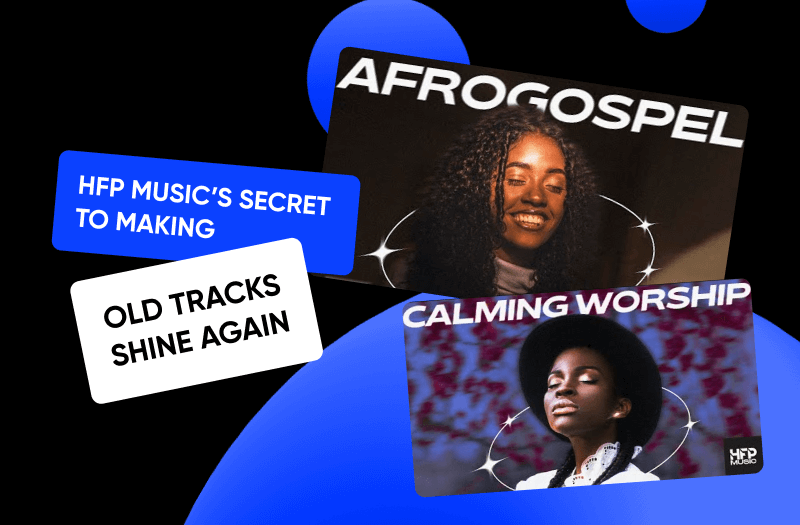
HFP Music didn't require lots of new uploads to get a boost. AIR turned their existing tracks into curated, branded compilations with tight metadata and a consistent release cadence — and those compilations cracked the channel's top-10 earners, delivering steady monthly revenue from music that already existed.
Own the Moment When It Comes
When an AI "leak" of Alena Omargalieva's track hit before the official drop, AIR staged a timed YouTube premiere and built tension around it instead of rushing damage control. The result: 169K views in 24 hours, a 183% income jump versus the previous quarter, and three weeks in Trends.
Use the Platform's Own Tools
- Playlists group your releases into binge sessions and feed YouTube's recommendation engine.
- Shorts cut from your tracks act as discovery hooks — a 15-second clip is how many viral songs of the last two years found their audience before the full version did.
- The Community Tab keeps listeners engaged between releases: polls, questions, and previews.
- Release countdowns and album pre-saves now appear on the album page, artist page, and album shelf for official YouTube Music releases — fans can commit to a track before it's out, and get notified the moment it drops.
- Exclusive video drops let artists share "thank you" clips, behind-the-scenes footage, and other fan-only content directly with their most engaged listeners — a direct channel to the fans a release depends on most.
Which Music Distributor Should You Choose?
The market splits into DIY subscriptions — you pay to keep music live — and partnership models like AIR Music (delivers to 100+ platforms including Spotify, Apple Music, Deezer, TikTok, and Beatport), where the distributor earns only when you do. Here's how the main options compare on the numbers that matter.
|
Distributor |
Pricing model |
The catch |
|---|---|---|
|
DistroKid |
Annual subscription ($22.99–$79.99+/yr) |
Stop paying, and your music is removed from all stores unless you pay a per-track "Leave a Legacy" fee |
|
TuneCore |
Per-release + subscription ($9.99–$54.99+/yr) |
Every release carries its own renewal fee — costs scale with your catalog |
|
CD Baby |
One-time fee ($9.99/single) |
No annual fee, but a permanent 9% commission on streaming, sync, and Content ID revenue |
|
AIR Music |
0% upfront, 70/30 partner share |
You must be accepted — and once in, a human manager, manual metadata audits, and editorial pitching are included |
The structural difference runs deeper than price. DIY platforms operate as software — automated tickets, metadata errors like duplicate artist pages that take weeks to fix, and Content ID sold as an add-on.
AIR Music assigns a personal manager who checks metadata and artwork before delivery, responds within 24 hours, includes Content ID and rights protection by default, and pitches priority tracks to official playlist curators. Artists keep 100% of rights and masters, and pay a 30% share only on what they earn.
Lose the Fees, Keep Your Rights
Distribute to 100+ platforms with $0 upfront costs and 0% subscription fees while retaining 100% ownership of your masters. Start releasing with AIR Music.
What Mistakes Cost Musicians the Most on YouTube?
Three categories account for most of the lost revenue and stalled growth we see across music channels: copyright shortcuts, packaging neglect, and promotion left to the algorithm.
Copyright Shortcuts
- Unlicensed samples: a short sample isn't automatically fair use — Content ID detects a few seconds and redirects the revenue.
- Unlicensed covers: without a mechanical license, monetization routes to the original rights holder and you keep little or nothing.
- Ignoring international rights: a sample cleared in one country can still trigger claims in another.
Packaging Neglect
- Generic titles: include the song name, genre, and mood — the algorithm ranks what it can read.
- Weak thumbnails: a generic or poorly lit thumbnail drops click-through even on strong music.
- Skipped captions and tags: both feed accessibility, retention, and discoverability — most musicians skip them.
- Low audio quality: audio is the product; poor mixing causes the early drop-off that kills algorithmic promotion.
Promotion Left to the Algorithm
- No cross-platform sharing: Instagram, TikTok, Discord, and email lists build the loyalty the algorithm alone won't.
- Ignored comments: skipping fan engagement reduces the repeat viewership that signals quality to YouTube.
- Ads without a hook: paid reach without organic traction burns budget on viewers who don't stay.
Every release deserves a pre-launch, launch, and post-launch plan — organic reach, engagement, and paid promotion working together rather than an upload left to fend for itself.
One wrong copyright call can wipe out months of revenue.
AIR Music clears rights, handles Content ID, and lets you keep 100% of your masters — no subscription, no per-track fee. → Start releasing with AIR Music.