

In one quarter, a Kids' channel network went from 24 million views to 299 million. Not through a viral moment. Through tightening the system behind every single upload, across five languages, simultaneously.
That is the story of one of our YouTube kids creators.
The creator ran several localized Kids' channels in English, French, Spanish, Hindi, Brazilian Portuguese, and others. We carried out daily moderation and gave targeted recommendations across the whole network. From July-September to October-December 2025, the results compounded into something that's worth breaking down properly.
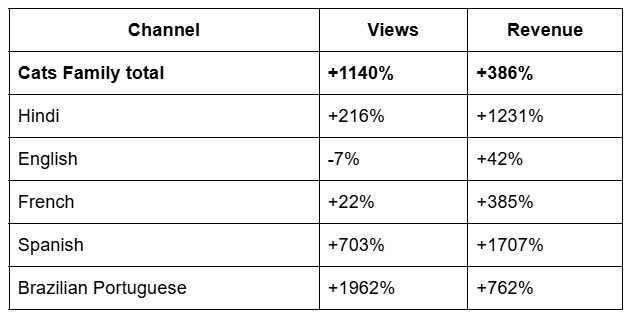
Every market moved differently. That's the first thing worth understanding, and we'll come back to it.
What Was Done
Four things changed across the network. Each one built on the last.
Small Mistakes Compound. We Caught Them Daily
Before any recommendations, we ran a full audit of every channel in the network. Then we moved into daily moderation, because for Kids' content, those two things have to work together.
What daily moderation actually looks like in practice:
- Our team reviews each upload as it goes live.
- Automated systems flag potential compliance risks and growth opportunities.
- Those signals get turned into specific recommendations that the creator's team can apply that same week.
One off-compliance thumbnail on one channel is a small problem. The same pattern repeated across five channels and fifty uploads becomes a systematic drag on every channel's algorithmic standing. Daily moderation is what catches it before it compounds.
34 Rules, Applied in Every Language
We monitor 3,000 channels daily. That gives us a view of repeating patterns most creators never see from their own dashboard, issues that show up across many channels long before any individual team notices them.
For Kids' content specifically, we turned those patterns into a practical resource: 34 YouTube Rules for Kids Quality Content. These were applied across every channel in this creator network.
This quality layer matters even more in kids' content because YouTube draws clear lines around made-for-kids classification, child safety, and eligibility for YouTube Kids.
Download a free 34-rule PDF
The 34 rules we applied here aren't a secret. Download your free copy and see exactly what we look for across every Kids' channel we work with.
Timing the New Year Window
We recommended increasing publishing frequency ahead of the New Year period. The reasoning:
- Audience demand on YouTube expands significantly around major holidays.
- The algorithm has more content inventory to test against a larger, more active viewer pool.
- More uploads = more chances for the system to find what works in each market.
The data confirmed the timing was right.
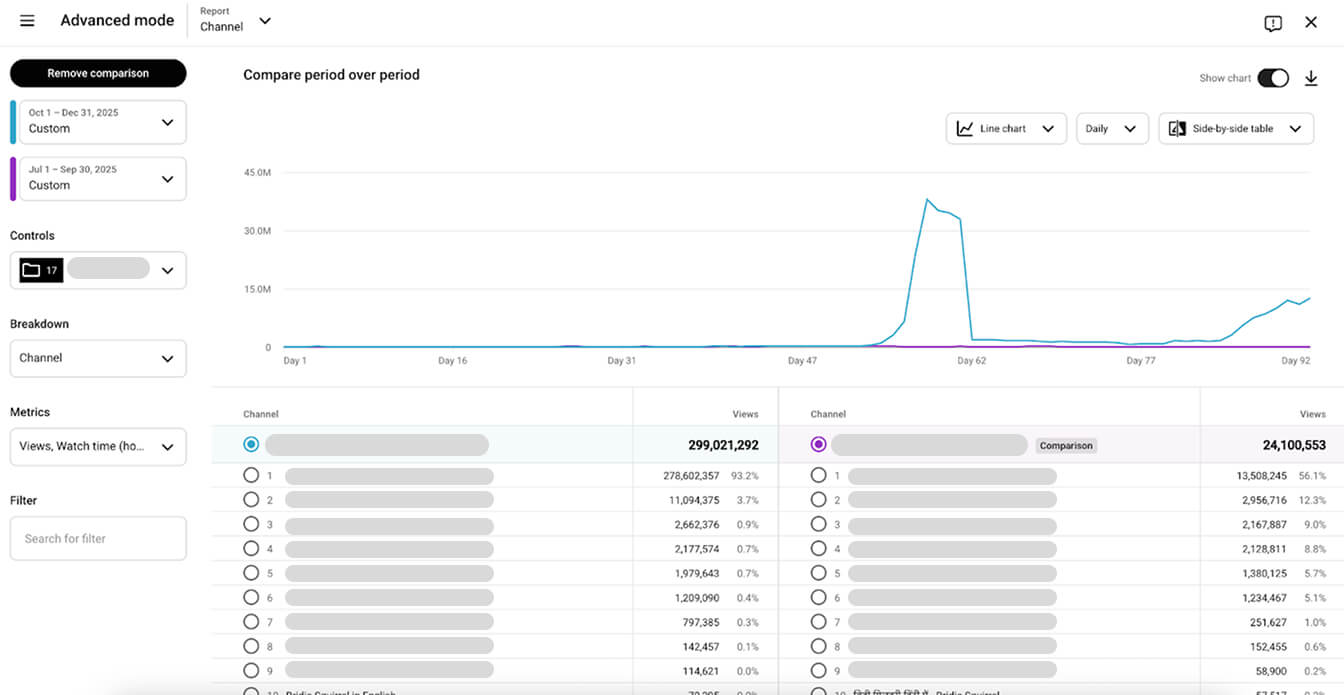
The daily views chart shows exactly what happened. The teal line (Oct-Dec) runs close to the purple baseline through the first 30 days. Then around Day 47, right in the New Year window, it breaks sharply upward, hits a peak around Day 62, and holds a sustained new floor all the way through Day 92. Frequency gave the algorithm more inventory to push exactly when it was actively looking for content.
81.8% of All Views Came from One Format
This is where the portfolio-level numbers come from.
We recommended pushing Shorts harder across all channels. Three reasons:
- YouTube actively promotes Shorts as a reach format for finding new audiences
- For Kids' content in particular, Shorts travel across languages and markets faster than long-form content
The traffic source breakdown shows what happened when the team did it.
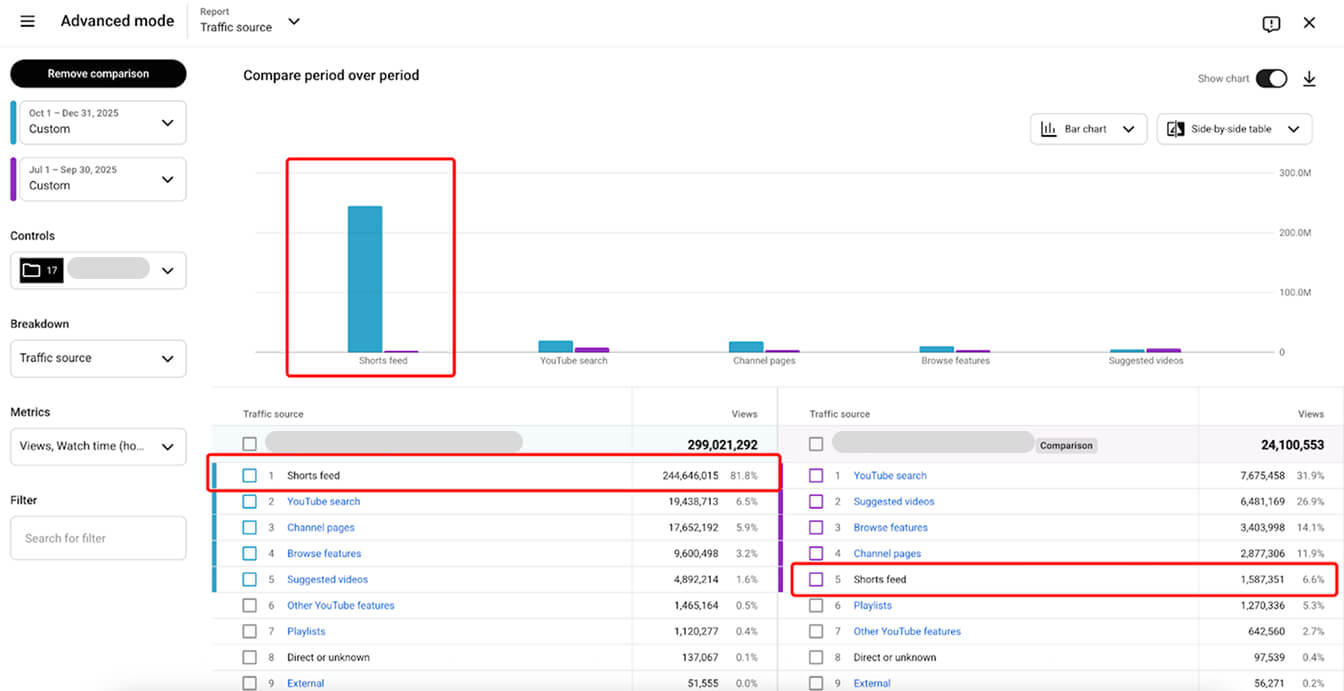
Before (Jul-Sep):
- Shorts feed: 1.6M views – 6.6% of all traffic.
- YouTube search was the #1 source at 31.9%.
- The network was essentially search-driven.
After (Oct-Dec):
- Shorts feed: 244.6M views – 81.8% of all traffic.
- YouTube search dropped to 6.5% in share (though it still grew in absolute views).
- Every other source became a rounding error next to Shorts.
That single shift, from search-driven to Shorts-driven, produced the +1140% at the portfolio level. The audit, moderation, and quality work made the channels ready for that distribution. The Shorts push is what triggered it.
Want to scale your YouTube channel?
We’ll audit the system, spot the hidden friction, and help your content perform more efficiently in each market. Contact us to get started.
Five Markets. Five Different Stories
The headline number is +1140%. But the per-channel breakdown is where the real insight is, because every market responded differently, and understanding why tells you how international YouTube portfolios actually behave.
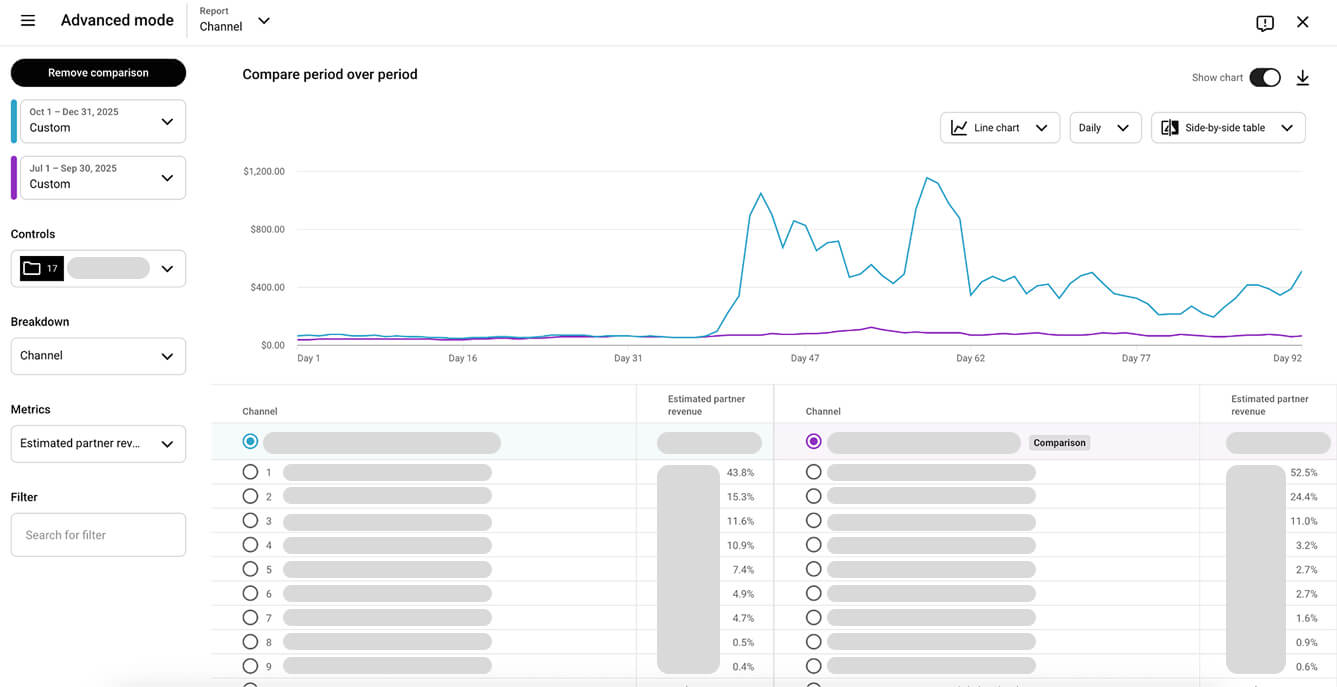
The revenue chart shows something structurally interesting. In the baseline period, the English channel was the portfolio's revenue anchor: the biggest earner by a wide margin. By Oct-Dec, Brazilian Portuguese had taken over as the dominant channel, with English dropping significantly in relative share. Not because English got worse. Because Brazil broke out so hard, it redefined the whole portfolio.
Brazilian Portuguese: +1962% Views, +762% Revenue
This is the breakout. The channel went from 13.5M views to 278.6M, and by October-December, it accounted for 93.2% of all portfolio views. Alone.
Why did Brazil respond so strongly to the Shorts push? A few factors likely combined:
- Brazilian Portuguese-speaking audiences are among the most active on YouTube Shorts globally.
- Kids' content in Portuguese Brazil was a high-demand, undersupplied category in Shorts at the time.
- The channel's visual-first format traveled without needing language adaptation in the Shorts feed.
Revenue grew +762% alongside the views. The audience that came through Shorts monetized well.
Spanish: +703% Views, +1707% Revenue
Spanish was the second-biggest reach story and the most dramatic revenue percentage in the portfolio. The +1707% revenue figure looks extreme, and it reflects both the Shorts-driven audience expansion and how undermonetized the channel was before. Spanish-language Kids' Shorts is a high-demand category, and getting there consistently at a higher frequency unlocked a market that had been sitting underserved.
Hindi: +216% Views, +1231% Revenue
Hindi tells a different story. View growth was more modest at +216%, the Shorts push didn't produce the same reach explosion as Portuguese or Spanish. But revenue grew +1231%.
What does that mean?
The channel reached a better monetizing audience mix as it scaled. More views don't always mean proportionally more revenue. The quality and engagement profile of those viewers matters. Hindi improved its commercial performance significantly without needing a viewership explosion to do it. That is worth paying attention to.
French: +22% Views, +385% Revenue
French is the most counterintuitive result in the portfolio. View growth was modest, +22%. Revenue grew +385%.
French-speaking YouTube audiences carry higher CPMs in Kids' content categories than most other markets. The moderation and content quality improvements moved the channel into better monetization tiers, meaning the same number of views started generating significantly more revenue. This channel got commercially healthier without needing a traffic explosion. Sometimes that's the better outcome.
English: -7% Views, +42% Revenue
English is the result that most people would misread. Views declined 7%. Revenue grew +42%.
As Shorts drove massive reach across the other channels, the English channel's audience mix shifted toward higher-quality, more engaged viewers rather than high-volume Shorts traffic.
Fewer views, better monetized.
The channel became more commercially efficient while the portfolio's reach engine ran through other markets.
This is a result worth sitting with: a channel can lose views and make more money. Raw view count is not the metric to optimize for.
Why This Worked
The four levers – daily moderation, content quality standards, posting frequency, and Shorts – were applied consistently across every channel. The results were not consistent, because the markets aren't.
That is exactly how strong international portfolios behave:
- One market breaks on reach (Brazil, Spain).
- Another improves its revenue efficiency without needing the reach growth (French, Hindi).
- A third becomes more commercially valuable while traffic shifts elsewhere (English).
The goal of a multilingual portfolio is a system where each channel has room to perform at its own pace, under tighter strategic control, while the whole portfolio compounds together.
This kid's YouTube channel is that principle in action. The creator built the content and executed the changes. We handled localization, moderation, and the strategic layer that tied it together.
Need Help to Boost Your YouTube Channels?
We work across 3,000+ channels simultaneously. That means we see patterns no individual creator can see from their own dashboard: what's shifting across markets before it shows up in your analytics, which unwritten rules are quietly killing reach on Kids' channels right now, and what the algorithm is rewarding that YouTube will never put in a help article.
- When we look at a channel, we bring that cross-network visibility with us.
- What's working on 200 channels like yours?
- What just stopped working?
- What the top performers in your language market are doing differently.
- And exactly what needs to change and what should stay untouched.
This is the team behind Kids Diana Show, Vlad & Niki, Jason Vlogs, and thousands of others across every major market.
If you want that perspective on your channel, get in touch.