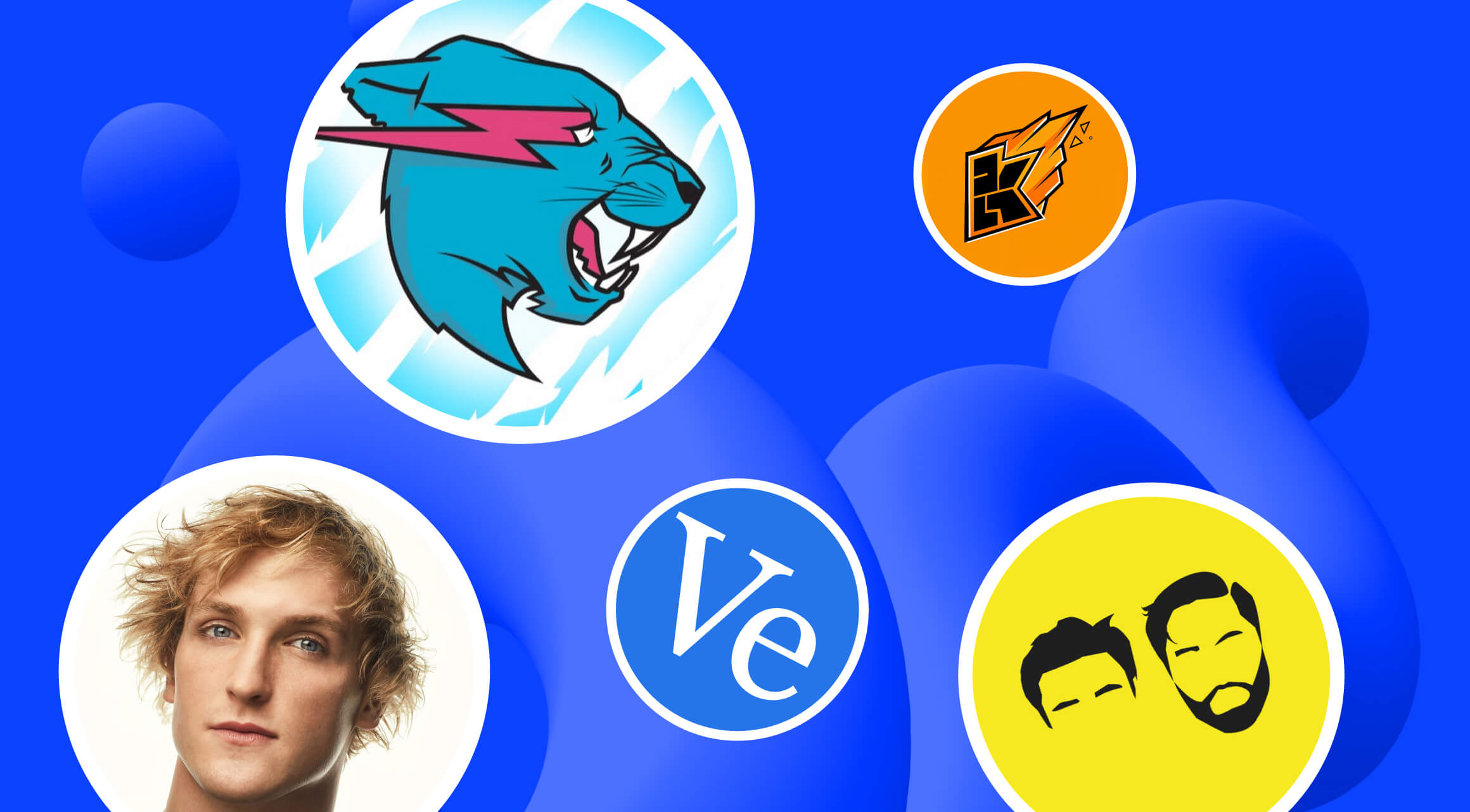

When AI arrived, it was promoted as a solution to almost every problem on the market. But that is not always the case. AI cannot replace creators, but it can help them make greater content. Let’s break down who’s using AI, what they admit to using it for!
MrBeast
The man, the myth, the legend, with over 470M+ subscribers on his channel. MrBeast had been rather blunt about his AI usage. He had even created several AI tools for YouTubers to use, such as Viewstats, and he had been promoting them in his videos. His team has publicly discussed using AI for:
- Thumbnail testing
- Title variation and CTR prediction
- Internal scripting support for pacing
- Translation and dubbing
His numbers are still the highest in the world, even after using (and creating) helpful AI tools.

The thing is, MrBeast doesn’t replace himself with AI. He still pretty much participates heavily in every video he makes, because pure human creativity cannot be replaced by a machine.
AI is a great tool that can help you create better content, but using it instead of you and your creativity means putting yourself under unnecessary risk of turning into an “AI slop” channel.
Kwebbelkop
Now, this is an interesting case of AI usage. Most creators use it in a very quiet way, mostly as a subtle helping tool. Kwebbelkop did the opposite. He fully adopted AI in every aspect of content making. His channel was one of the earliest gaming YouTubers to cross tens of millions of subscribers.
Then, in 2023-2024, he announced moving toward what he described as an “AI-assisted channel.” It was a bold move at the time. The one that ended up harming his channel, because a lot of people had unsubscribed once the soul had left his videos.
What did he use AI for?
- Script generation. He used AI to outline and fully generate commentary scripts.
- AI voice cloning. He replicated his voice to produce more videos without recording his voice.
- AI avatar/virtual presenter. He created an AI-generated “avatar” to serve as a video host.
Kwebbelkop had lost quite a bit of his subscriber base because the trust had dissolved.

From a purely operational perspective, Kwebbelkop was trying to solve real content-making problems. He had stated that he was in an active state of burnout, and AI was helping him reignite the spark for the content creation. As a creator, he had felt the pressure to maintain the upload frequency despite declining mental health.
In theory, AI offered a solution. However, the audience didn’t take to it kindly. Viewers claimed his content felt hollow and soulless, and that the human aspect had disappeared, leading many loyal subscribers to stop following him altogether.
Kwebbelkop later acknowledged his mistake publicly and dialed down on AI. His story serves as an example of what can happen if you overdo it with AI.
Source: Ro Ramdin
Colin and Samir
Colin and Samir are usually pretty transparent about using AI. They often promote some tools they have tested if they find them useful enough. What do they usually use AI for?
- Podcast transcription and clip identification
- Idea clustering from long interviews
- Audience sentiment analysis from comments

They use AI, they are open about it, and it pays off. The lesson here is that moderation and honesty are important aspects of using AI.
Ali Abdaal
Now, let’s move on to one of the most vocal proponents of AI, Ali Abdaal. So far, he had been very open about its usage. He had posted several videos discussing his use of AI for:
- Course outline drafts
- Email and script iteration
- Repurposing long-form content into Shorts and newsletters
- Brainstorming

The numbers speak for themselves here. Ali uses AI to help him think, while preserving the personality of his content. This is why his audience isn’t pushed back, because he’s transparent about it, while also keeping the human touch.
Logan Paul & Impaulsive
Logan Paul had stated that he doesn’t like AI, but he uses it in his content quite often. In his videos and podcasts, he asks AI questions and discusses its tools with his current guests on the podcast. Moreover, the Impaulsive team has referenced AI tools for:
- Automated clipping of long podcast episodes
- Captioning and formatting Shorts
- Early-stage thumbnail drafts

His show isn’t AI-generated, but he does use it to shorten the time he spends on annoying and boring tasks.
Veritasium
Now, let’s talk about the creator who approaches AI more cautiously than others, Veritasium. He speaks a lot about AI, its rapid development, and what the future might hold for us if we let it go without legal regulations. However, he still uses AI tools to:
- Cross-reference sources
- Identify conflicting studies
- Flag areas requiring deeper verification

He had notably stated and underlined that even when you use AI like this, you need to double-check whether or not AI is right. These are only suggestions, starting points, if you will. For educational creators, this reinforces an important rule: AI can point you in the right direction, but it’s your job to prove or disprove as a human creator.
Where AI Adoption Is Fastest
Surprisingly, mega-channels aren’t the ones that implement AI the most. It’s the mid-tier creators (100k-1M subs) that are the most aggressive adopters. There are a lot of videos involving AI and about AI from such channels. They openly use AI for:
- Script polishing and writing
- A/B testing titles and metadata
- Translating content for secondary channels
- Voice cleanup and noise removal
Why do they use AI the most? Because the more they post, the more the algorithm notices them and the more chances there are for them to become a mega-channel in the future.
What Does YouTube Say About AI Usage?
In short, YouTube is being cautious. They encourage the usage of AI as a helpful tool, but they are harsh when it comes to using AI to replace human involvement altogether. Their new No Fakes Act ensures that the new technology cannot harm the creators. YouTube is also actively punishing realistic deepfakes and requires such content to be marked accordingly.
There’s also an ongoing fight against low-quality AI content, which many refer to simply as “AI Slop”. YouTube’s algorithms clean such videos up, and the channels that post them will no longer be eligible for monetization. YouTube hopes that this will help to reduce the influx of low-quality videos and encourage human creativity.
Since algorithms change to adjust to this, creators should expect:
- Short-term unpredictability in views
- Format experimentation penalties
- Higher emphasis on originality
According to real stats, what we have seen from other creators and their channels, AI works best when:
- It reduces repetitive labor
- It helps creators as a research tool
- It helps with tapping into other language markets
It fails when it replaces your opinion and your human involvement. The viewers hate seeing content that feels hollow and detached. Therefore, the real advantage of AI is in knowing when to use it and when to avoid using it altogether.
The creators who will win and stay on top use AI as a tool to increase their productivity and reduce burnout. Human touch can never be replaced by a machine, after all.

![YouTube’s Premium Lite, New TV Subscriptions, and More Mobile Editing Tools [February 2026]](https://air.io/storage/fgLFWtdI2dXc1PaK6cPfLgRyBm1PtpjBPMZkJFvD.jpg "YouTube’s Premium Lite, New TV Subscriptions, and More Mobile Editing Tools [February 2026]")
