
Not Sure Which Languages to Choose?
Meditations, affirmations, tarot readings, motivational speeches, channeling… YouTube is full of spiritual and self-help content. But scaling such videos globally requires more than linguistic accuracy.
This niche is different. It deals with belief systems, emotional vulnerability, inner transformation, faith, intuition, and mental health. Which means your task is to translate the deep meaning… and that can be a tough one.
Why This Content Needs a Different Localization Strategy
Unlike entertainment or educational content, spiritual and self-help creators rely heavily on:
- emotional pacing rather than fast delivery,
- personal authority and authenticity,
- metaphors, affirmations, and symbolic language,
- a strong parasocial connection with the audience.
A literal translation can easily strip away warmth, sound unnatural, or (in the worst cases) feel manipulative or cringe. That’s why cultural nuance and tone in spiritual videos are the foundation of successful localization.
And when done correctly, this type of content travels extremely well across borders.
Proof It Works: Creators Whose Content Resonates Globally
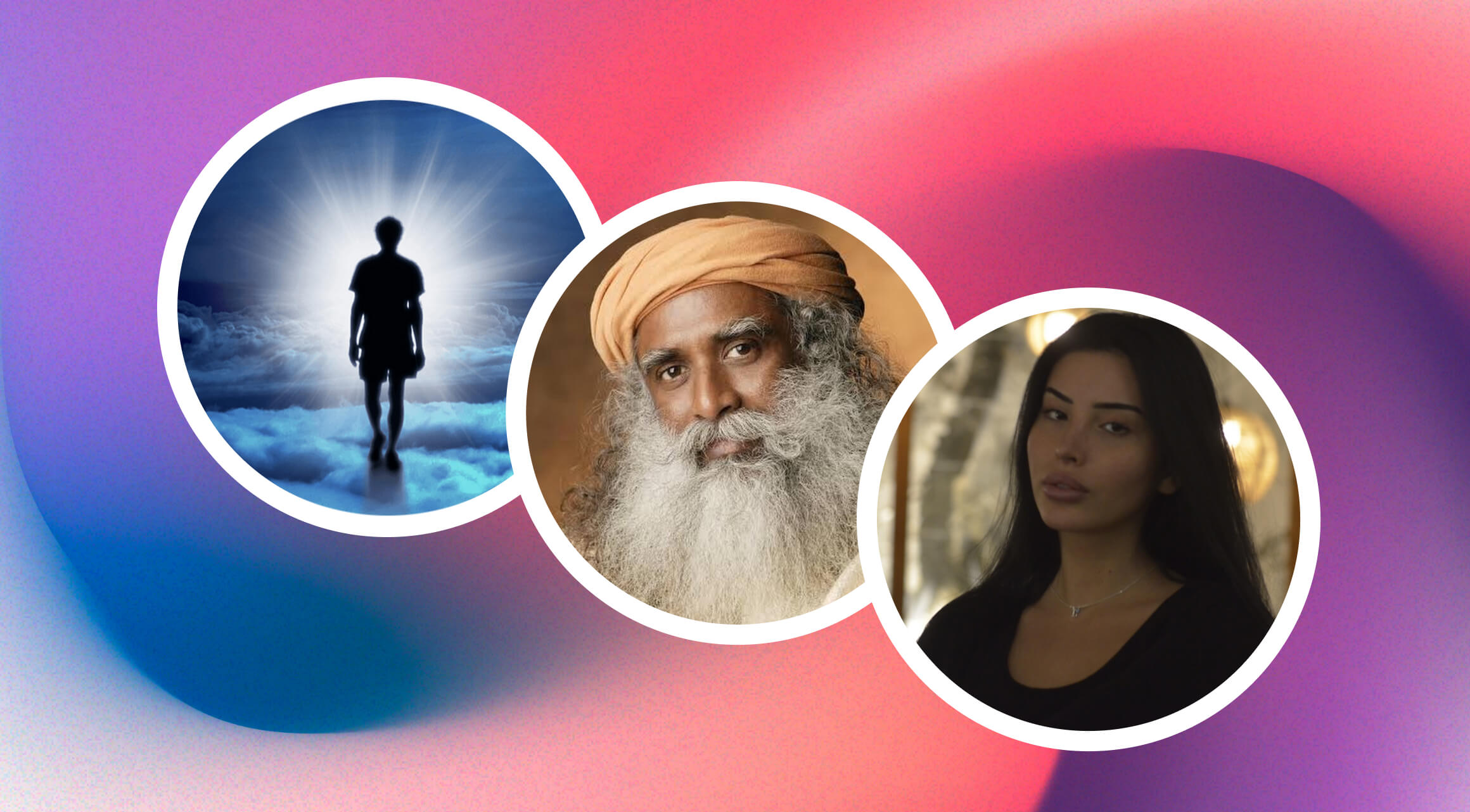
Below are three examples that clearly show demand for translated spiritual and self-help content, and how different localization approaches are used.
1. Sadhguru
Sadhguru (12.6M subs) is one of the clearest examples of how spiritual content can be intentionally and successfully localized at scale. His content is distributed across multiple official language channels, including versions in Spanish (2.71M subs), Tamil (944K subs), Hindi (6.78M subs), Telugu (948K subs), Ukrainian (5.23K subs), and more.
Sadhguru’s team implements emotional tone adaptation and voice actors that maintain philosophical depth. A literal or automatic translation would not be enough. His localized channels preserve the contemplative pacing and interpretive openness that make the original content effective.
2. The Other Side NDE
The Other Side NDE (515K subs) focuses on near-death experiences, spirituality, and reflections on consciousness and the afterlife. In addition to audio tracks, they have a separate Spanish channel, The Other Side en Español (169K subs).
NDE-related content performs well internationally because curiosity about life, death, and meaning is universal. However, this is the most culturally sensitive translation you can think of. Concepts of death, afterlife, and spirituality vary significantly between regions. It’s better to avoid absolute claims and maintain a respectful, narrative-driven tone that allows viewers to interpret experiences through their own belief systems.
3. Thewizardliz
Thewizardliz (8.43M subs) is a strong example of modern self-help content. She experimented with multi-language audio tracks to automatically translate her videos into 10 languages, including Dutch, French, Portuguese, Spanish, Hindi, and more.
However, the robotic delivery likely failed to preserve the confidence, emotional nuance, and authority that define Liz’s content. As a result, she turned off the feature on the newest videos. This highlights a broader challenge in self-help video localization: it needs a human voice capable of emotional tone adaptation.

Struggling to localize spiritual content?
We’ll help you choose the right localization model for tone-sensitive content. Reach out to us, and we’ll walk you through your options.
Why Voice Actor Selection Is Critical
This niche is unforgiving when the tone is off.
Unlike gaming or entertainment, where speed and humor lead, spiritual and self-help content demands empathy, calmness, and cultural fluency. If the voice sounds robotic or forced, trust is lost (and with it, the audience).
That’s why we don’t just pick voice actors based on accent. We look for professionals with domain expertise. For several AIR Media-Tech partners in the self-help niche, we’ve onboarded voice actors who are also trained psychologists, theologians, or mental health coaches. They’re people who understand the weight of the words they’re speaking.
Here's what we look for in casting:
- Tone control.
- Subject familiarity.
- Cultural alignment.
That’s the difference between translation and localization for mindfulness content.
Cultural Filters: What Works in One Region May Fail in Another
What sounds empowering in Los Angeles can feel fake in Berlin or overly intense in Tokyo.
A few patterns we’ve seen in practice:
- Brazil: Emotional, expressive tones perform well. Listeners want energy, not monotone affirmations. The use of “Você pode!” or “Você merece isso!” hits harder than neutral translations.
- Germany: Direct, rational framing wins. Overly abstract spiritual phrases (e.g., “ascend into your vibrational field”) often fall flat unless localized carefully.
- Japan: Soft, measured delivery is key. Loud confidence or bold affirmations can sound jarring. Language must reflect respect and emotional subtlety.
That’s why we often retune delivery for global spiritual content to ensure the message feels native.
MLA vs Separate Channels: How to Choose the Right Localization Model
There’s no single “better” approach to going global. Both Multi-Language Audio (MLA) and separate language channels are proven, scalable strategies, and even the largest creators use both, depending on goals, content format, and audience behavior.
Option 1: Multi-Language Audio (MLA)
MLA works especially well when:
- You want to scale internationally without fragmenting your channel
- The content benefits from shared engagement and centralized analytics
- Consistency of publishing cadence across languages matters
- You want flexibility to add or remove languages over time
With MLA, creators can offer localized audio while keeping all views, comments, and performance signals in one place. When paired with human voiceovers and proper cultural adaptation, MLA supports strong retention, global reach, and long-term growth.
Option 2: Separate Language Channels
Separate channels are a strong choice when:
- Audiences expect highly localized experiences
- Cultural context significantly affects how the message is received
- Different regions respond better to tailored titles, thumbnails, and pacing
- You want full creative and strategic freedom per market
This model enables deeper cultural adaptation, niche-specific voice casting, and script refinement. It’s the approach used by creators like Sadhguru, where literal or automated translation would undermine the message.
Which One Should You Use?
In practice, the strongest strategies often combine both.
MLA and separate channels aren’t competing models — they’re complementary tools. The right choice depends on content sensitivity, audience behavior, and long-term growth goals, not channel size or creator level.
At AIR Media-Tech, we help creators choose — and combine — the models that make the most sense for their content and their global ambitions.
How We Translate Spiritual Content at AIR Media-Tech
We follow a structured, proven workflow designed specifically for tone-sensitive niches like spirituality and self-help:
- Market Analysis → Before translating, we analyze which countries have interest in the content theme using YouTube data, search intent, and watch time metrics.
- Voice Actor Casting → We cast voice actors who understand the niche. Our talent pool includes professionals with backgrounds in wellness, psychology, theology, and personal development.
- Testing on Top-Performing Videos → Instead of translating everything at once, we localize 5–10 of the creator’s most popular videos into selected languages. This allows us to evaluate retention, engagement, and audience response with high-signal content.
- Back Catalog Translation → For language versions that show strong performance, we translate and localize the back catalog to build depth, consistency, and long-term audience loyalty.
- Optimization, Growth & Scale → Once live, we actively optimize titles, descriptions, thumbnails, and publishing strategy per language. With ongoing performance analysis, we boost and grow these language versions (in many cases, scaling them to hundreds of millions of views).
In self-help and spiritual content, your voice is the experience. Flat AI dubbing kills it. So do mismatched narrators. For a proper localization, you need a partner who gets the nuance, the emotion, and the strategy behind truly global reach.
That’s what we do. Contact us to learn more.