

Ever wondered how to start a blog for kids? We've gathered 7 life hacks that have proven successful for our partners in the Kids & Teens YouTube niche, helping them reach millions of subscribers. Today, we're sharing these strategies with you.
We'll also guide you on how to create a YouTube channel for your kids under 13 and keep them safe. Yes, it's a lot of work, but don't worry, we're here to make it easier for you.
Starting a YouTube Blog for Kids Under 13
If your child is under 13, they can't have their own YouTube channel. As a parent, you can create one for them using your Google account. This enables them to upload videos, engage with viewers, and demonstrate just how creative they can be. For kids aged 13 to 17, they can have their own channel, but parental permission is required.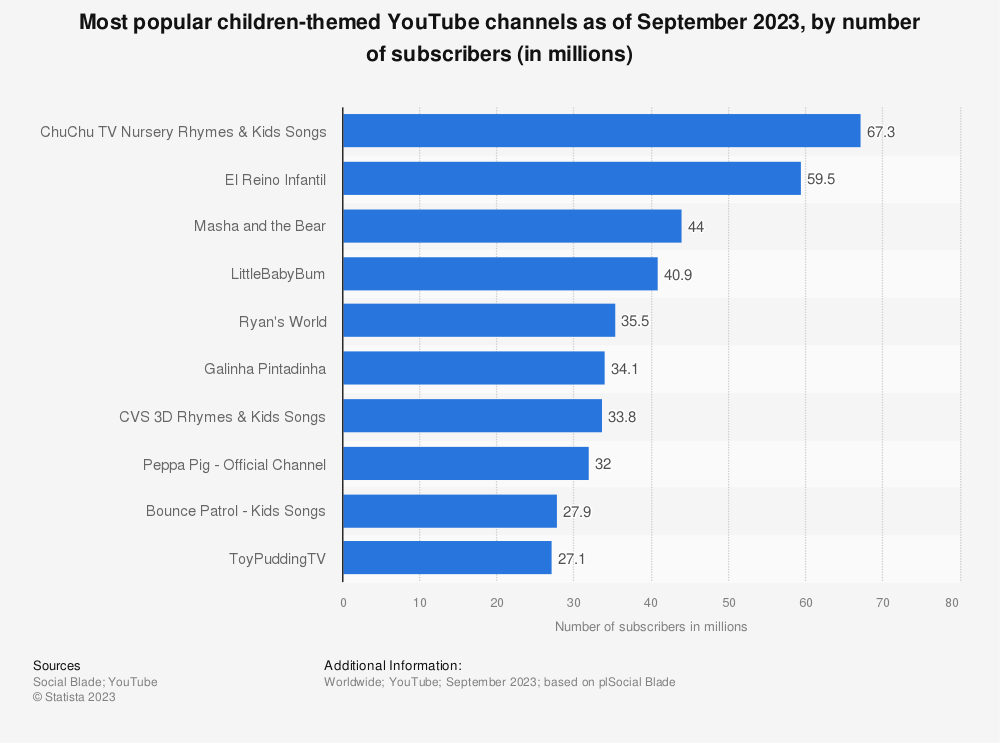
How to Set Up a YouTube Channel for Your Kid?
To set up a YouTube Channel for your kid, you only need to follow a few easy steps:
- Get a Google Account if you don't have one. You can create it by either using an existing account or setting up a new one specifically for your child's channel.
- Log in to YouTube: Use your Google account and make sure it's the correct one to associate it with your child's channel.
- Open YouTube Studio: Click on your profile picture, and then select "YouTube Studio."
- Create the Channel: In YouTube Studio, click "Create" > "Upload video." Follow the steps to set up your child's channel, keeping safety in mind by steering clear of personal information.
→ Extra Tip #1: Setting up a YouTube Channel for your kids is one thing, but putting their blog on YouTube Kids is a bit trickier. Look at how to get published on YouTube Kids, and success will await you.
Googling YouTube-related questions from time to time?
200+ AIR specialists check 3,000+ channels and every platform update daily. Add AIR to preferred sources, and Google surfaces our precise answer first. → Add AIR to preferred sources.
How to Help Your Kid Make a Successful YouTube Blog?
To kick things off with a kids’ YouTube channel, the best place to look is at the beginning of the giants' journeys. At the 1 Billion Followers Summit 2026, our partners Vlad & Niki and Jason Vlogs shared the 'street-level' advice they wish they’d had when they first hit record.
Here is how you actually start a kids' empire today, according to the people who built them.
1. Education Comes First
The most successful kids on YouTube spend less time on camera than you think. Jason Kaplan films only 8–10 hours per week.
For both Vlad & Niki and Jason Vlogs, school is the priority. Filming happens 2–3 times a week, max.
At home, be a parent. On set, be a producer. Keeping these roles separate prevents burnout and ensures the kids are actually having fun, which is exactly what the algorithm (and the new 2026 laws) want to see.
2. What to Film?
Ali Kaplan of Jason Vlogs doesn't believe in "throwing spaghetti at the wall." His team starts every week with 30 ideas on the table. Only three make it to production.
To survive the 2026 landscape, your ideas need three specific layers:
- The "kids first" filter: Victoria (mother of Vlad and Niki) notes that ideas shouldn't come from a boardroom. They come from observing play patterns. If a child naturally responds to a specific toy or emotion, it’s a candidate.
- The trend analysis: "If a trend is big, we jump in," Ali says. They use AI and trend-tracking to ensure they aren't shouting into a void.
- The educational hook: If it doesn't teach a value (like sharing or curiosity), it’s a no-go for the 2026 algorithm.
YouTube offers a ton of content types, making it the number 1 video platform in popularity. But choosing what to blog about can be a bit overwhelming.
Simple advice:
"Help your kid focus on something they love!"
If it's enjoyable for them, the motivation will stick around. Encourage your kids to check out YouTubers they like for format ideas, but make sure they understand not to copy them. YouTube is a chance for your child to show their own shiny personality that people would love to follow. So, help them be their authentic selves in their videos.
→ Extra Tip #2: To spark your creativity, we've put together a list of 18 content ideas for your kids' YouTube channel. Take a look for some inspiration!
3. All You Really Need is a Smartphone, But…
All you need to make videos is a working camera. It could be a smartphone, iPhone, Android, GoPro, expensive or cheap camera (anything works when you're starting). But for a pro touch, consider investing in:
- Microphones. Here you can find more about how to make the voice sound better on YouTube.
- Ring light.
- Tripod Stand.
These will make your kid look pro, just like successful YouTubers.
4. Obsess Over the "Boring" Stuff
If you want to grow from 1,000 to 1 million subscribers, you have to move past "just filming." You have to become a student of your own data.
- Iterate: Ali Kaplan admits he was "never satisfied" with a process early on. They obsessed over retention curves (the exact moment a kid clicks away) and fixed it in the next video.
- The A-Team: Once you start growing, focus on two roles: a great cameraman and a genius editor. As Ali says, "A good editor is the difference between 1 million and 100 million views."
5. Use AI as Your "Secret Employee."
In 2026, you cannot ignore AI. It’s the ultimate "force multiplier" for a small team.
- Both channels use AI for ideation, generating thumbnail variations, and optimizing titles.
- "Either you hire 50 people and don’t use AI, or 10 people who do," says Ali Kaplan. Use tools like VidIQ or AI-driven analytics to see what’s working before you waste time filming.
Here are the essential tools our experts and partners use to keep production high and overhead low:
- Start with YouTube’s own Inspiration Tab in Studio to see exactly what your audience is searching for before you hit record.
- Use the AI Idea Generator for YouTube to turn a broad concept into a data-backed video prompt.
- The AI Metadata Lab will generate titles and descriptions that will align with YouTube policies and rank your video higher.
- Leverage Google’s Nano Banana for next-gen thumbnail imagery, or check out our breakdown of the Top 5 AI Thumbnail Tools.
- Speed up your workflow with these Top 5 Auto-Edit Tools to handle repetitive cuts.
- Turning long-form into Shorts is the biggest trend of 2026. Use these 8 AI Tools for Effortless Reformatting.
- Kids' content needs to be clear and bright. Use these Top 10 AI Audio Enhancement Tools to fix any background noise from home filming.
6. Help Your Kid to Post Consistently and Stream it 24/7
Being consistent on YouTube is key; aiming for 1-3 videos per week is a good start, especially when building an audience. The impact of regular posting is huge. Take Kids Diana Show, our partner, for example; they went from 0 to 112 million subscribers by posting 6-7 times a week in their first year.
And even if your posting schedule gets messed up, there's a trick – 24/7 Live Streaming! You can launch continuous streams with old videos to keep those subscribers coming.
Current Trends in Children’s Content
To help your kid’s channel stay relevant in 2026, use these hottest trends shaping the kids’ niche:
Shorts Dominance
YouTube Shorts has 2 billion monthly active users. Many creators in the kids’ niche get millions of views per Short, even when their long-form videos don’t perform as well.
Here’s a specific case: after launching a dedicated Shorts plan, the channel saw a 52% surge in total views and a 33% boost in revenue in just over a month. The data shows that frequent Shorts create a "halo effect" that lifts the entire channel's watch time, subscribers, and earnings.

Short, snackable videos (15–60 seconds) are perfect for children & heavily promoted by YouTube’s algorithm.
Interactive Content
Think challenges, quizzes, or “choose your own adventure” storylines where kids can comment to decide what happens next. This interaction makes kids feel like part of the story. For parents, it’s a safe way to encourage creativity without pushing personal information sharing.
VR/AR & Gaming Formats
Nearly 3 in 10 (26%) Gen Alphas live in households with VR headsets.
Platforms like Roblox, Minecraft, and VR-based gameplay are huge among kids. Successful channels often combine gaming with storytelling or roleplay. For example, a Roblox play session can be turned into a fun adventure series, while AR filters can add a magical twist to ordinary vlogs.
Cross-Platform Influence
Many trends start on TikTok (songs, dances, memes) and then move to YouTube Shorts. Kids’ creators who spot these early can ride the wave. Gaming livestreams on platforms like Twitch are also influencing what younger audiences expect on YouTube (interactive play sessions, live Q&A).
The 2026 Kids Quality Content Blueprint
For kids' videos, every word in your title and every micro-expression on your thumbnail matters. After analyzing thousands of channels, we’ve distilled the "unwritten" rules into a definitive kids content quality guide.
1. What YouTube Loves (The "Green Zone")
YouTube rewards content that acts as a "digital co-parent." To grow, your videos should:
- Teach positive values: Sharing, kindness, and empathy.
- Spark curiosity: Science, animals, and "how things work."
- Encourage "off-screen" creativity: DIY crafts, building, and physical play.
2. The Absolute Forbidden (The "Red Zone")
Violating these will get you demonetized, or worse:
- Scary/repulsive content: Even "educational" monsters or loud, shocking jump scares are out.
- Negative peer examples: No bullying, "pranking" parents in a mean-spirited way, or showing kids as criminals (the "Prison Theme" is a hard no).
- Medical trauma: Avoid showing needles, syringes, or frightening doctor visits.
- Dangerous challenges: Anything a child might try to replicate that could lead to injury.
3. The "Food & Brand" Trap
"In 2026, the 'Sugar Rush' strategy is dead," notes Ilona Smirnova, Head of Kids YouTube Channel Development at AIR Media Tech. "Promoting junk food, candy, or excessive unboxing is seen as manipulative. If you want the algorithm to favor you, swap the lollipops for apples and the branded toy-flooding for genuine creative play."
Thumbnail Science: Good vs. Bad
Your thumbnail is your storefront. In the kids' niche, it’s also your first compliance check.

Thumbnail Checklist:
- Are the kids genuinely happy (not acting terrified)?
- Is there a total absence of "Clickbait" (the video actually delivers what the image shows)?
- Is the image clear of scary characters like Labubu or Squid Game references?
Master Your Metadata
Metadata (Titles/Tags) should help discovery, not trick it.
- Do: Use simple, descriptive language.
- Don't: Use ALL CAPS, "Keyword Stuffing," or false promises like "YOU WON'T BELIEVE WHAT HAPPENED!"
What Happens When You Align
When you follow these rules, the algorithm stops fighting you and starts fueling your growth. We’ve seen that shifting to these 2026 quality standards has an immediate impact on a channel's bottom line.
Here is how the numbers change when creators make that shift:
The 3,283% Revenue Explosion: By refining their content strategy to meet these quality principles, one partner, Emir Ela, saw their revenue skyrocket by 3,283% in just three months.
The Azooz & Jude Case: This channel focused on long-term authority, resulting in a 50,7% surge in views and a 140% revenue increase in a single quarter. By cleaning up their metadata and focusing on the "Green Zone" topics that parents trust, they turned a stagnant channel into a high-traffic destination that the 2026 algorithm prioritizes.
Want a clear 34-rules roadmap?
Download the Full PDF: The 34 Essential Rules for Kids’ Content Success in 2026
How to Get Noticed by the Algorithm in 2026?
Once you have the content, you need the technical "handshake" to get the algorithm to notice you.
When you’re managing thousands of channels, you start to see that the difference between 10,000 views and 10 million views often comes down to the optimization.
Here is the granular advice our experts use to keep our partners at the top of the feed.
1. Title Architecture: The Dual-Purpose Hook
In the kids' niche, a title isn't just a label; it’s a functional tool. We split every title into two distinct parts: Interactive and Functional.
The Interactive Hook
This is the emotional "click-trigger." For teens, we might go bold with caps and emojis: "EXTREME HIDE AND SEEK in the supermarket? 😱".

For younger kids, we keep it calm and clear to avoid looking like spam: "Tatty and Misifu in the Magical Park? 🏆".

The Functional Keywords
This is for the robots. We add specific phrases like "Challenge with my brother" or "Fairy Tales for Kids" to help you rank in search and recommendations.

"The golden rule is complementarity," says Ilona Smirnova.
"The title should explain the video, not repeat the thumbnail. If your thumbnail has a text overlay, your title should provide the context that closes the curiosity gap."
2. Making a "Killer" Description
A description is a roadmap. Our experts break it down into four critical zones:
- The first 2–3 sentences are all that appear in search results. We make them descriptive and keyword-heavy immediately.
- Encourage the sub or the follow right after the summary.
- When linking to other content, never send viewers to a playlist page where they have to choose a video. Instead, link directly to the first video within the playlist. This way, the video plays automatically, and if auto-play is on, the rest of the series follows, keeping viewers engaged for much longer.
- Especially for compilations, we use timecodes to help viewers navigate and to give YouTube more "textual" context for what’s happening in the video.
3. The 2026 Semantic Core: Building the Tag Layer
We build a "Semantic Core" where your title, description, and tags intersect. We categorize tags into three frequencies:
- High-Frequency: The broad "neighborhood" (e.g., cartoons, school life).
- Medium-Frequency: What the successful competitors are using.
- Low-Frequency: The laser-focus (e.g., unique character names or specific challenge titles).
"Don't guess your tags," warns Ilona Smirnova.
"We use tools like VidIQ to audit competitor tags and find multilingual opportunities. A keyword like 'cartoons' might be saturated in English but wide open in Arabic. We look for the gaps."
4. Re-Optimization: Giving Dead Videos a Second Life
If a video stagnates, we don't give up on it. We perform a "Metadata Refresh."
- When re-optimizing, do not delete all your old tags at once. Those tags are what the algorithm currently uses to index you. Abruptly removing them can tank your views.
- Gradually introduce new keywords and a fresh thumbnail. This signals to the algorithm to "re-index" the content, often resulting in a second wave of views months after the original post.
What’s New for Kids’ YouTube Channels in 2026
Child safety online has become the main concern of governments and platforms alike in recent years. YouTube, Discord, TikTok, and many other platforms have released safety and age verification features to protect kids from content they shouldn’t have access to.
This trend is likely a byproduct of the shifting regulatory landscape in 2026, specifically driven by the implementation of COPPA 2.0 in the US and the updated GDPR-K frameworks in the EU.
Legislative changes in 2026 have shifted from "polite suggestions" to aggressive legal mandates that force platforms to treat anyone under 18 with extreme caution. In the US, COPPA 2.0 just cleared the Senate (March 5, 2026), finally raising the protected age to 17 and banning targeted ads for teens.
Meanwhile, the EU is implementing the AI Act and streamlined GDPR-K rules that require platforms to prove they aren't using "addictive" algorithms on minors, or face massive fines.
Key 2026 Legal Realities:
- COPPA 2.0 (US): Expands privacy laws from age 13 to 17; bans "individual-specific" (targeted) advertising for all minors.
- KOSPA / KIDS Act (US): Forces platforms to turn on the highest privacy settings by default and removes "infinite scroll" features for kids.
- EU AI Act (Enforcement 2026): Categorizes algorithmic recommendations for kids as "high-risk," requiring platforms to perform constant safety audits.
- Mandatory Age Checks: New UK and EU laws now require "highly effective" age verification (like ID or AI face-scans) to access social apps.
- The "Duty of Care": Under both US and EU law, platforms are now legally liable if their design—not just the content—causes "reasonably foreseeable" mental harm to young users.
"In 2026, the algorithm looks at ethics," says Ilona Smirnova. "YouTube is now a 'Safe-by-Design' platform. If your content relies on dopamine loops or scary hooks to keep kids watching, the system will eventually shut the channel down to protect its own liability."
How YouTube Reacted to New Regulations?
YouTube is overhauling its entire technical infrastructure. The platform has transitioned from a "trust but verify" model to one where AI makes the rules. For creators, this means the days of "self-tagging" and hoping for the best are over.
Here is how the platform has re-engineered itself for the 2026 era:
1. The Rise of AI Age Detection
In the past, creators decided if their content was "Made for Kids." In 2026, YouTube’s AI makes that decision for you. If the system detects that a viewer is under 18, regardless of their account settings, the "Safety Wall" immediately goes up.
- If a minor is detected, YouTube kills targeted advertising. Instead, ads shift to contextual-only, meaning they are based on the video topic, not the viewer's data.
- Comments, autoplay, and push notifications may be automatically disabled for that user to prevent "addictive" loops, protecting the platform from the legal "Duty of Care" liabilities.
2. "Command Center" Analytics for Parents
To meet the new legal "Duty of Care," YouTube gave parents the same tools the professionals use. Inside YouTube Studio, you now have features that help you stay safe while growing.
- Cap how much time your kid spends on the Shorts feed daily.
- Turn off the feature that automatically starts the next video.
- Permanently hide specific creators you don’t want your child to see.
- Set "Take a Break" or "Bedtime" reminders that pause the app.
- Pause watch and search history so the algorithm stops suggesting new videos based on recent activity.
- Control everything through the YouTube Family Center or the Family Link app.
Top Kids Channels for Inspiration
Check out how these AIR partners are crushing it in the kids' content space. They all have different tactics, and all of those played out for them pretty well.
Kids Diana Show
100M+ subscribers
Diana’s family went from 0 to 100M subscribers in 7 years. Localization into 20 languages, video distribution, and continuous content posting boosted their global reach.
Amelka Karamelka
5M+ subscribers (main channel) | 436M+ views
Localized to 18 languages, Amelka saw a 436M+ view increase and 1M new subscribers in a year.
Ninja Kidz TV Português
90% of traffic from Shorts
Focused on 5 Shorts/day, Ninja Kidz TV exploded in Brazil, growing traffic and revenue. Consistent Shorts = massive growth, especially in local markets.
The Melobies
917% subscriber growth
Optimized thumbnails, metadata, and YouTube Kids listing led to a 917% increase in subscribers. Smart tweaks and platform strategies = huge results.
The DONA English
5.2M subscribers | 2B+ views
DONA English turned to 24/7 live streaming with pre-recorded videos, making up 60% of their revenue in just a few months.
→ What smaller creators can apply:
- Create Shorts to drive engagement and grow your reach.
- Leverage 24/7 live streaming with existing content to increase watch time and revenue.
- Translate your videos (at least metadata) into key languages to reach a broader audience.
- Optimize thumbnails and metadata to boost visibility & CTR.
- Get listed on YouTube Kids to increase visibility with the right audience.
- Consider simple storytelling formats (family skits, roleplay) that resonate globally.
Protecting Your Child’s Digital Footprint in 2026
As a parent of a child with a YouTube channel, remind them not to share personal information with anyone online; stranger danger exists in the virtual world as well. Additionally, make sure that their pages have strong passwords, teach them how to recognize phishing attempts, and encourage them to report anything that feels off.
It's equally as important important to watch out for subtle information hints, such as making videos in a school uniform or disclosing their location or plans. School content seems like an easy and fun idea, but you could unknowingly land your child in a very real danger.
Remember to keep the conversation open and talk to them about their online experiences.
Consider Privacy Settings
You can choose to make the channel private or unlisted, limiting viewers to only those with the link. This ensures safety by restricting access to friends and family. However, keep in mind that these privacy settings might hinder building a successful channel as they limit a wider audience.
→ Extra Tip #3: You can also turn on YouTube's Restricted Mode for extra content protection.
Monitor Comments or Turn Them Off
Regularly monitor your child's video comments for safety. Teach them not only to appreciate positive comments but to respond to inappropriate comments and to report any concerns promptly. Consider turning off comments for added protection, especially if your child is still learning to navigate online interactions. Remember that for a sensitive teenager or a kid, one negative comment can bring irreversible damage.
Stay Involved
Actively engage in your child's YouTube experience. Review their channel, discuss content, address concerns regularly, and set some rules about their YouTube blogging. It could be something like:
- They should get permission before featuring siblings or other people in their YouTube videos.
- They can't upload videos on YouTube without showing you first.
- They need approval from you for collaborations with other YouTubers.
- They must not use stunts, challenges, or activities that might be unsafe.
- They can't disclose specific details about your home, like room layouts or addresses.
- They should not share harmful or offensive opinions.
- They can't share passwords or give access to the YouTube account to anyone.
- They must follow YouTube rules for content creators.
Once your kids' channel is secure and set up, it's time to guide them in building a successful blog.
Monetization Strategies & COPPA Compliance
Monetizing a kids’ channel is tricky because of COPPA (Children’s Online Privacy Protection Act) restrictions. YouTube limits personalized ads on “made for kids” videos, which usually lowers ad revenue. But this doesn’t mean kids’ creators can’t earn well; they just need a smarter strategy.
Here are proven ways to monetize kids’ content while staying compliant:
- Ads + YouTube Premium Revenue: Even though personalized ads are restricted, display ads, non-personalized ads, and Premium watch time still generate income.
- Merchandising: Branded toys, clothing, or digital products can be an additional revenue stream once the channel has a fan base.
- Brand deals & sponsorships: Many toy and educational brands want to reach families. Sponsorships often pay better than ads alone.
- Localization: Translating content into other languages multiplies potential reach.
- YouTube Kids App: Getting listed here opens up massive traffic opportunities because the app is built specifically for children, and parents trust it. Let’s look through the cases:
Real Cases from AIR Media-Tech
Getting on YouTube Kids is complicated. But benefits for creators are unmatched: an active audience, less competition, and higher visibility. Here are the results of our partner’s 4 channels after we helped them get on YouTube Kids:
→ Case #1: Baby Ben en Español
- After joining YouTube Kids, views jumped by 396% (1.7M → 8.8M in one month).
- Revenue grew 110% with YouTube Kids driving 67% of all traffic.
- Long-term, views grew 456% and revenue grew 437% quarter over quarter.
→ Case #2: Baby Ben em Português
- Quarterly views doubled (+142%), and revenue grew 456%.
- YouTube Kids accounted for 35.3% of total views, proving the app is a game-changer.
→ Case #3: BIBO TOYS
- Monthly views exploded by 609% (10.3M → 73.4M).
- Revenue climbed by 227%.
- YouTube Kids drove 67.7% of total quarterly views.
→ Case #4: BIBO TOYS PRT
- Views skyrocketed by 1859% (262K → 5.1M).
- Revenue grew by 253%, with 78.3% of views coming from YouTube Kids.
Takeaway: Monetization is not only about ads. Getting onto YouTube Kids and expanding into new languages can multiply both traffic and revenue.
Next Step?
This is pretty much the scoop on starting your kids' YouTube channel. When you notice that blogging for kids turns from just a hobby to a business, reach out to us! We've got tons of great strategies that have already helped others grow.
Take the HZHtube Kids channel, for example. We translated their videos into 12 languages, and now they have over 54 million subscribers worldwide, even though the main channel has only 12 million. Your kids' channel could be the next big hit in fast growth!
