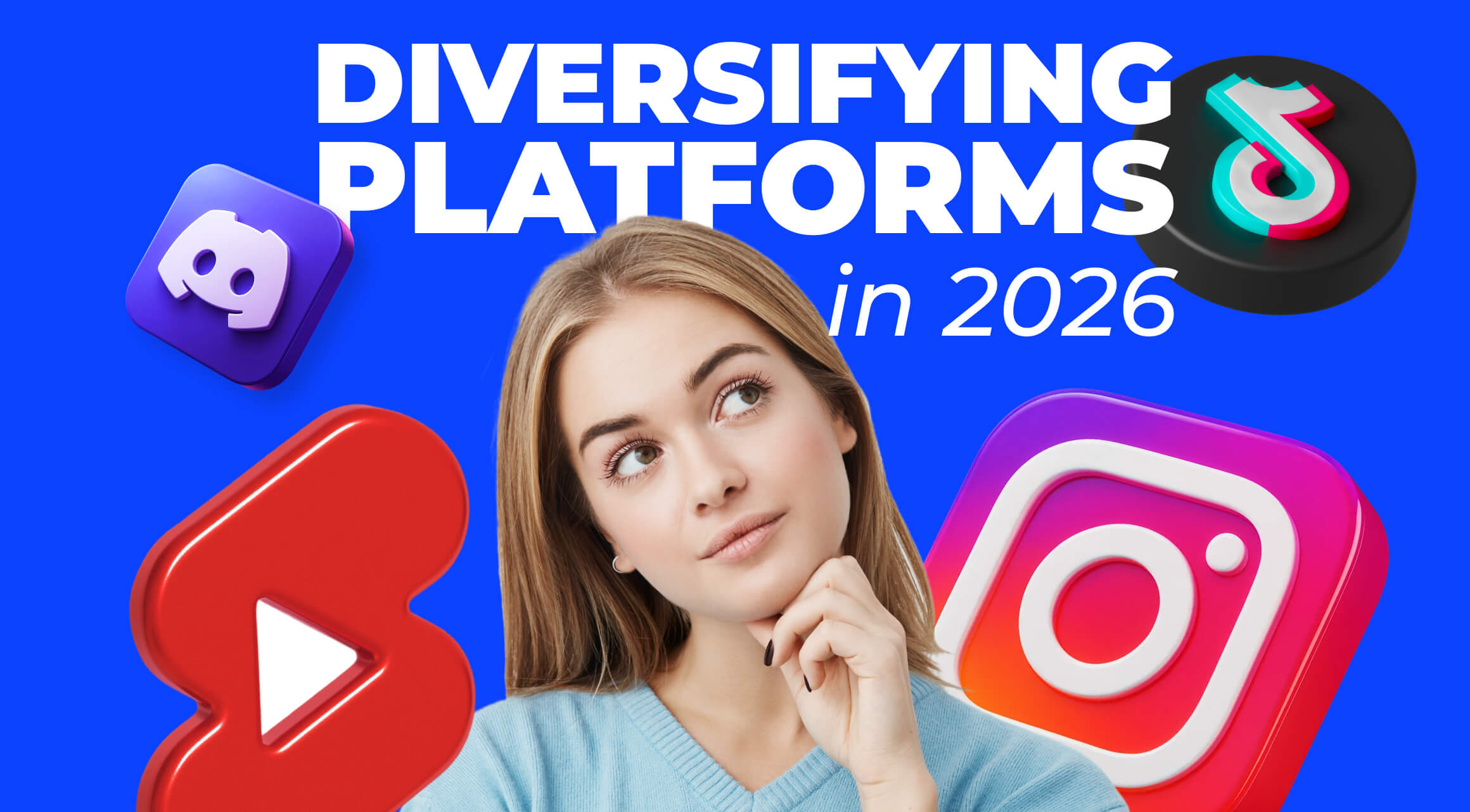

More and more creators are diversifying their platforms. But do you have to do it? Let's break it down.
Before we start digging into the meat, let’s keep in mind that not every creator needs to diversify their platforms. The old ‘be everywhere’ advice is just that, old. When you don’t have a decent team behind your back, and your main platform doesn’t have a solid footing (we’re talking not a lot of subs, chaotic schedule, unstable channel core), diversifying can actually bring more harm than good. But, for those who can afford it, diversifying can mean stability. Why so? Well, it’s simple.
Reason 1: Algorithms Can be Unpredictable
Every platform is fighting for attention like never before. Algorithms change and evolve daily; what worked a couple of months ago can no longer be viable. So creators who rely on a single platform can feel a bit shaky in their footing. That’s why creators are trying to spread their identity across platforms. So even if one feed stops surfacing their content, another can pick up the slack. That way, they create a safety net for themselves.
What is more, AI-driven feeds are somewhat rewriting how audiences find content. Recommendations are less tied to follower graphs and more to behavioral prediction systems. Such is the case on multiple platforms, and such is becoming the case on many more. What does this mean?
- Your follower count matters a little less.
- A small channel has a decent chance to outperform a large one with the right content.
Do you remember when YouTube Shorts first appeared? That was when the algorithm shifted, and a lot of long-form creators lost some amount of traffic. Most of the time, it’s not intentional, but it does affect creators and their revenue. But when you have several platforms that you’re earning with, an algorithm shift in one doesn’t affect things as much. Yes, it’s still inconvenient, but never fatal.
Case: Kallmekris
We all know the creators who exploded on TikTok. We’re talking millions of views overnight with some sketches, dances, lip synching, and things like that. And a lot of those who stayed solely on TikTok had eventually lost their popularity. One of the examples is a TikTok channel called Paradise Bartender. At the peak of their career, they could easily amass millions of views per video. Currently, their latest video sits at almost 6k views, which is not a lot for TikTok.
Now, let’s switch to the channels that made it. Kallmekris started as a TikTok star in 2020, at the peak of the pandemic. She was best known for her skits that lasted from 30 seconds to 1 minute. She became an overnight sensation. In only a year, Forbes listed her channel as the fifth-highest-earning at $4.75 million.
But, she didn’t just stop there. She decided to branch out on YouTube, creating two channels that earn this (in approximate estimation):
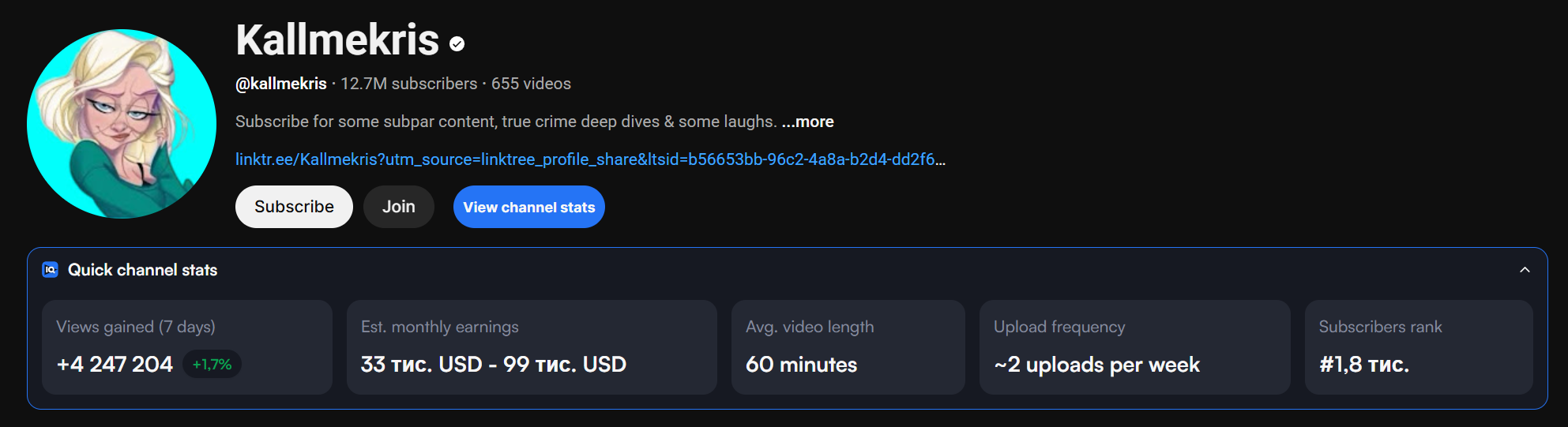

She continues to post on TikTok (where she has almost 51M followers), but she has also branched out beyond YouTube, with her pages found on Twitch, Instagram, Patreon, and so on. However, she didn’t branch out too early. It was a gradual process.
Source: Smosh Alike
Reason 2: Capitalizing on Opportunities
It’s like having several jobs, only in this case, you earn more by doing the same thing. In 2026, every big-time creator with a huge following has at least several revenue streams. Every platform monetizes differently, and each one rewards a different piece of effort.
Think of it as distributing your work into more buckets. Your long-form can become Shorts. Your Shorts become TikToks. Your TikToks become Reels, and so on. One piece of content can generate six separate income streams if you structure it right.
The more ‘hooks’ you have in the water, the more opportunities you can potentially capture:
- More sponsorships
- More platforms recommending you, which means a potential to tap into the wider audiences
- More passive revenue from old content
Some creators describe it as ‘stabilizing’ the income.
Case: FutureCanoe
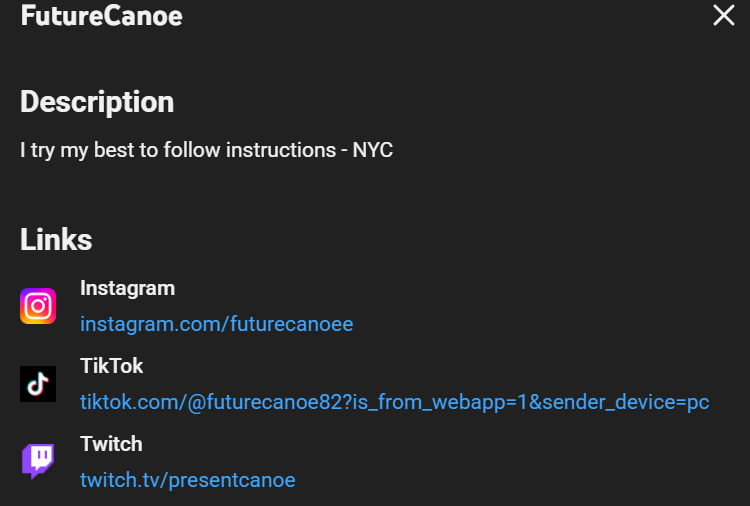
Although a TikToker turned YouTuber (FutureCanoe) doesn’t have the controversies attached to his name, he still diversified his revenue streams as much as he could to have that stability.
He started on TikTok, expanded on YouTube, and continued on Twitch and Instagram.
This is his estimated earnings on YouTube.
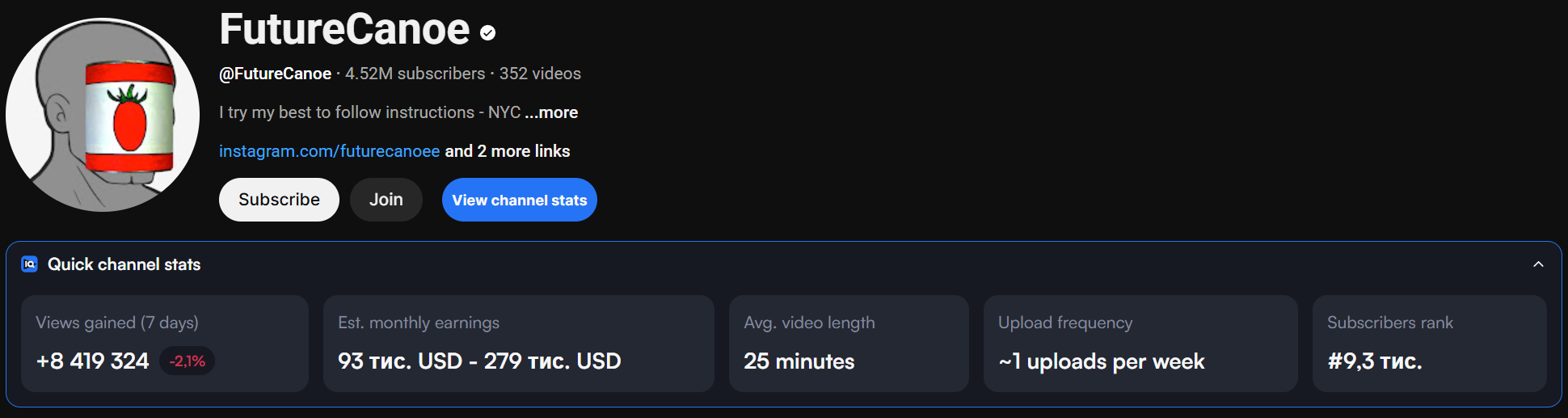
This might look impressive, but one revenue stream can sometimes prove to be unreliable, especially during unpredictable algorithm shifts.
Reason 3: Brands Prefer Multi-Platform Creators
In 2026, more than half of consumers will purchase things directly through social platform shopping features. Therefore, brands might tend to partner with creators with a decently sized social media presence across several platforms to advertise their products to more people who could potentially become buyers.
Cross-platform ad campaign deals can bring impressive results and bring in a lot of revenue, so this is the case of win-win for both the creator and the brand. Creators who diversify can potentially get more deals due to their increased presence and visibility.
But that’s not the only reason for some creators to diversify their content. If you’re prominent enough, you can get separate brand deals on both YouTube and other platforms of your choice, which, again, increases and somewhat stabilizes your revenue. If one platform doesn’t land a brand deal, others can pick up the slack.
Case: Ice Cream Sandwich
The main hub of Ice Cream Sandwich is YouTube, but it is also present on TikTok, Instagram, and Twitter. Since his channel specializes in animation (and they are, frankly, long to make), he often takes up brand deals on Instagram and Twitter.
According to VidIQ, his estimated earnings are as follows:
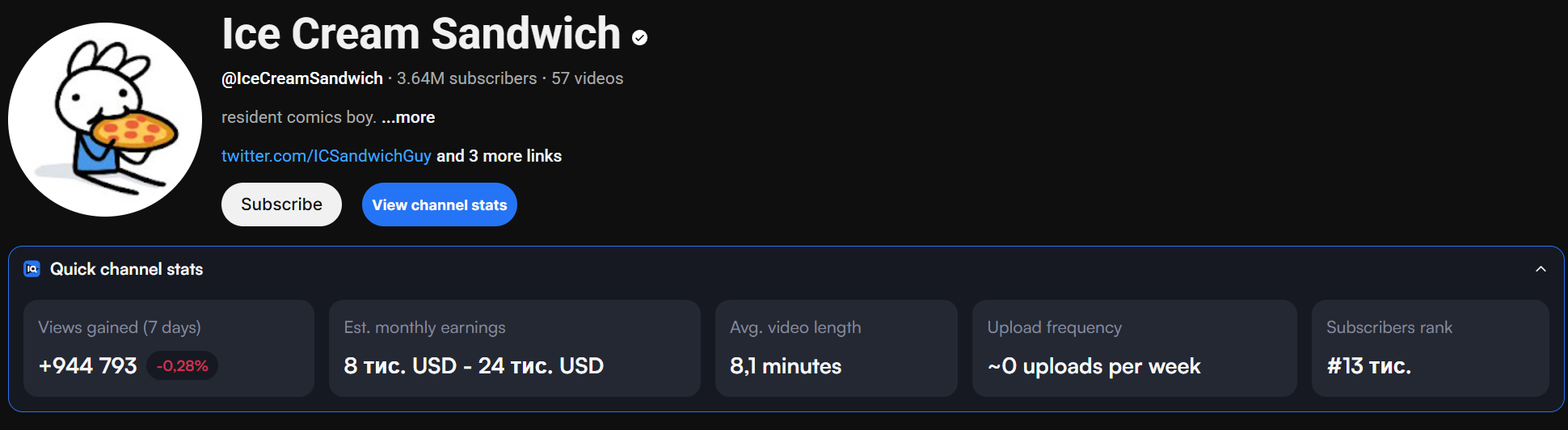
His latest videos on both TikTok and YouTube happened to be sponsored deals, where he promoted games that he liked to play across several platforms.
Reason 4: Different Platforms Offer Different Things
A mere decade ago, the most popular platform was YouTube. Everyone was there. Then there was Tumblr, Twitter, Instagram, and Facebook (each less popular for content creation, but still very prominent on the scene). Right now, choices are abundant when it comes to the platforms you want to use for work.
And each platform offers something unique. YouTube is versatile nowadays, but TikTok is still slightly better in terms of discoverability (especially among younger generations). Twitch and Discord are great for engagement with the fans directly.
So, why not unite it all? Especially if your audience is subscribed to your personality. They’d watch you on any and every platform you’d go to.
The creator-fan relationship nowadays is very identity-dependent.
Case: CaseOh
CaseOh, as many creators in these examples, started on TikTok. Then, he moved onto Twitch and, eventually, YouTube. Why did his audience follow? His content is, by no means, unique. However, he did charm his fans with his personality, which guaranteed his later success. Diversifying, in his case, was only a logical choice to expand his revenue and gather even more loyal fans.
According to VidIQ, his YouTube earnings are as follows:
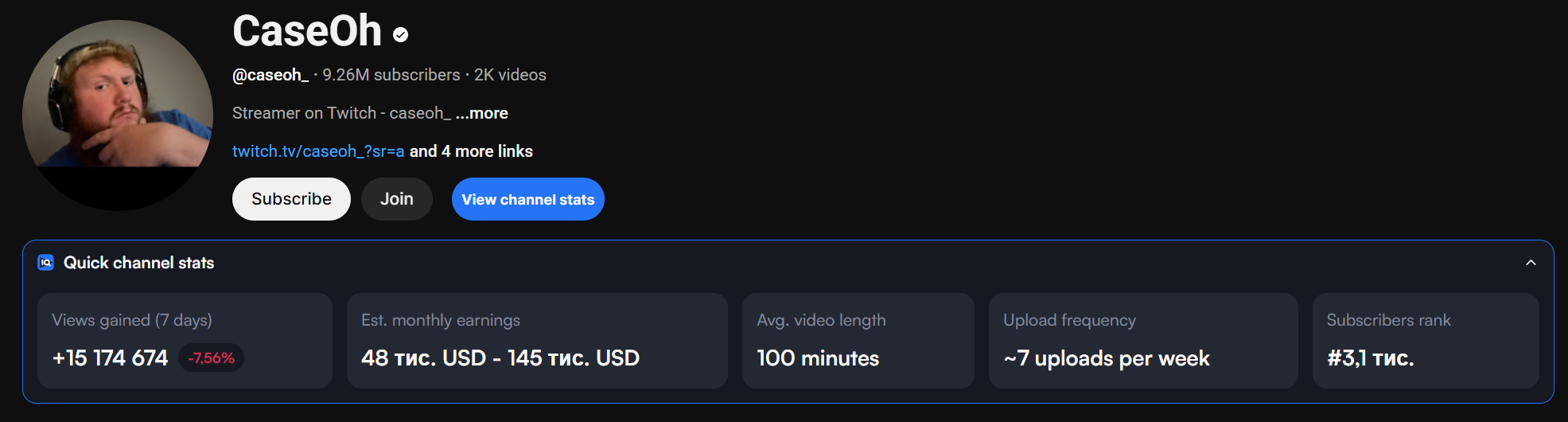
While that might not look as impressive as some other YouTubers, consider that he has plenty of other revenue streams. He was so popular and such a hit, in fact, that he won the creator of the year’s awards in 2024-2025.
Source: MoreCaseOh
So, How Should You Diversify Without Losing Your Mind?
Creators often think diversification means ‘more work’. We see it differently. For us, it means ‘smarter distribution’. Here’s what works:
Stage 1: Build Your Core Platform
Usually, at the heart of a creator’s multi-platform strategy lies a core platform, and for a lot of creators in 2026, that platform is YouTube. To thrive long-term, your core platform needs to serve as the foundation of your content identity.
So, here you need to focus on:
- Finding your core and creating a strong identity.
- Finding your niche and how you fit in the content-creation world
- Follow retention and watch time, adjust things accordingly
YouTube rewards creators who can keep viewers watching. To grow, your videos need to hook people and keep them engaged. From there, you can do Shorts and YouTube streams, connect Memberships, and solidify your place on YouTube.
Once you’ve built a solid base with YouTube, this will be your “pillar content”, your foundation that you’ll repurpose across other platforms.
Stage 2: Add One High-Leverage Satellite Platform
This is where diversification begins. Once you have a strong foundation on one platform and have gained a solid team, you can expand to a secondary platform. Don’t overdo it by spreading your focus on several; take one step at a time. Your goal is to multiply your reach without spreading yourself too thin.
Keep it simple. Once you start succeeding on one platform, branch out carefully to others to see where your audience responds best.
Stage 3: Build a Community Hub
Now that you have multiple pieces of content floating across different platforms, it’s time to focus on the glue that holds everything together: your community. A community will support you outside of the platform’s algorithm, which is a very important asset to have in your arsenal.
What do you do at this stage? First of all, you increase the interactions with your fans in the Community Tab on YouTube. You try to respond to comments, react to messages on streams.
If you think you’re ready, you can pull your viewers into Discord. This platform is great for creating a tight-knit community, where you can interact with fans directly and build meaningful connections.
You can also try out Patreon, because it’s great for monetization through direct support. But remember, at this stage, the focus isn’t money, but nurturing that creator-fan bond.
Stage 4: Use AI to Expand, But Sparingly
Now that you’ve created your core content, it’s time to turn that one video into multiple pieces of content (without multiplying your workload). Here’s where AI tools come into play. They can help you repurpose your content across multiple formats.
If you want to learn more about what AI tools can help you make your channel more efficient, consult these articles:
-> Top 8 AI Tools for Changing Video Formats
-> Top 10 AI Tools for Effortless Chapter Generation
Why use AI? The right tool can take your long-form video and create 8-20 pieces of content in a matter of minutes. This means you get more mileage from your content without needing to shoot dozens of extra videos or waste hours editing. Efficiency is very important when it comes to creating a multi-platform empire. If you don’t have a team, using AI sparingly is your next best choice.
Remember, creators are diversifying for a lot of reasons. Some are doing that because of the reasons stated above, and some lean into other platforms because of other things. The core remains the same: they want to make an impact and have a safety cushion in case the algorithm breaks.
If you want to build a career that lasts a decade (or longer), you need to learn how to adapt. If you struggle to do so by yourself, see a decline in your viewership, and don’t know how to improve it…
With a unique access directly to YouTube, we can help you with any YouTube-related question you might have. After working with more than 3000 channels, we know what works.
See positive changes on your channel with AIR Media-Tech.