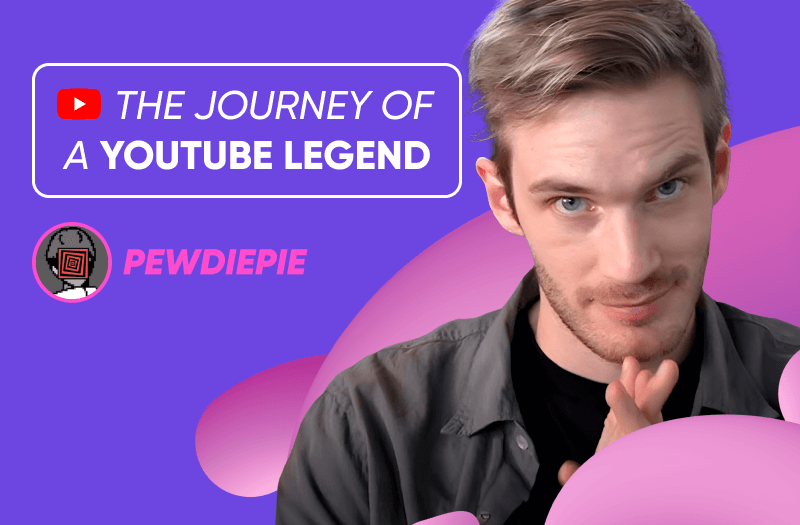


Few creators have been around for as long as PewDiePie has, so his decision to take a step back from regular uploads in 2020 was a shock to his fans, and at the same time a special moment for YouTube as a whole.
PewDiePie’s break from YouTube was a personal choice, but it’s also a lesson to all creators out there: one that speaks to the pressures of constant content creation, the importance of prioritizing mental health, and the need for healthy self-reflection. So what more can we learn from Felix’s break?
Lesson 1: Taking a Step Back
PewDiePie was always open about his struggles. Back when he uploaded a video every single day, he grew fast, yes, but along with his YouTube channel grew the pressure of creating and his burnout.
When he felt like he couldn’t do this anymore, he addressed his fans head on. No more daily uploads. A vacation was needed, because the longer he kept going, the heavier was the mental toll. So his month-long break was a great way to get away from all the controversies for a while and just take a breather. Recharge.
What’s important to note as well is that he didn’t just disappear out of nowhere and jumped straight into radio silence. He made a casual video prior to his break, explained everything, and his fans understood..
And when that became too much to bear, after all the controversies and history on YouTube, his break became more permanent and nowadays he uploads when he has something to say or when he feels like it.
Felix talked a lot about why he didn’t quit YouTube for good and his reasoning for uploading once in a while. Daily uploads were draining him and he wanted to do YouTube just for fun. What’s more, he talked about how he envisions the future of his channel.
The first lesson creators learned from this is that burnout is real and it catches up to you fast. Fame and money isn’t worth losing your sanity for. We’ve seen too many creators go too hard for too long without realizing the toll it takes until their mental health suffers.
A break isn’t a failure; it’s a way to preserve the quality of your work and your passion for creating.
The second lesson is that taking a break doesn’t mean you’re stopping and giving up on YouTube. It means that you’re realigning. In Felix’s case, he had the opportunity to rethink his content, what he wanted to do, his priorities, which later translated into a more varied and personal content style.
Lesson 2: Setting Boundaries in a 24/7 Content Cycle
Pewd’s break highlights something that creators tend to overlook, which is the importance of setting boundaries and creating a work-life balance that works. The 24/7 nature of YouTube and social media can lead to unhealthy cycles of content creation where you’re constantly chasing the next upload, the next brand deal, the next viral video, and very soon your YouTube personality overtakes your life completely.
Felix, who had built an empire on his daily uploads, knew that something had to be left behind in order to maintain his long-term success. Setting boundaries is important. We’ve all felt the pressure to keep up with the algorithm or the demand for constant content.
Work-life balance is something that you have to keep in mind as a creator. By stepping back, PewDiePie showed that even the biggest names need time to disconnect from the pressures of the platform to avoid getting consumed by it.
Remember, you are the one who controls the content and its uploading schedule, not the other way around.
Lesson 3: The Value of Adjusting Your Content to Match Your Growth
Once the break was over and PewDiePie returned, he didn’t just go right back to the usual upload schedule and previous content. His content changed and somewhat matured with him, taking a more personal, relaxed approach.
The switch wasn’t random or out of nowhere, which allowed him to build an even stronger connection with his audience, and, what’s even more important, keep his content fresh and relevant.
So what’s the lesson?
Creative evolution is necessary if you want to stay relevant. Making the same type of content over and over again might be good for a while, but eventually it might become boring to your audience.
As Pewds once said in one of his videos:
“If you enjoy making them [YouTube videos], people will enjoy watching them, and if people don’t watch them, then at least you’re having fun making them. So you can’t lose anyway.”
Just because something worked a few years ago doesn’t mean it’ll work forever. As a creator, you need to experiment and allow yourself room to grow even if it’s branching out to different types of social media or translating your content in different languages (both of which we can help with).
Remember that your audience follows you for you, not just for your niche. PewDiePie’s move away from the “Let’s Play” format can serve as an example that you don’t have to be stuck in one type of content for the rest of your career.
You can make content that you like and that allows your personality and voice to shine through in new ways.
Don’t be afraid to lose and stall. If you feel like you’re exhausted by a certain type of content, taking a step back can give you the freedom to do something more fulfilling without losing your audience.
As PewDiePie himself explained in one of his videos about quitting playing games for other people’s entertainment: it wasn’t something he wanted to do forever and the more he pushed himself the less he wanted to continue.
Lesson 4: Audience Loyalty is Earned
One of the most interesting aspects of Felix’s break from YouTube was how his subscribers reacted, because even though the break was for over a month, his audience haven’t turned away from him. In fact, many respected his honesty in discussing why he needed to take a step back. Felix kept the conversation open.
Being honest with your fans builds loyalty and sense of fandom. For PewDiePie, while he was away he let his fans run wild on his subreddit, which created some great memes in the process. This is the true power of community-building.
Lesson 5: The Reality of YouTube
The last lesson we have learned from Felix’s break is that YouTube can be unpredictable at times. The platform is constantly changing and updating, which by itself isn’t a bad thing. But it’s something that every creator needs to adapt to. PewDiePie, even after a decade of being ‘the face of YouTube’, had to adjust his content style several times.
For creators it means being flexible and versatile, being able to adapt to changes that they can’t always control. Don’t fight the platform’s rhythm, adjust to it.
We do it every day. Following all updates, getting emails about the next changes upfront, watching how they work out on 3,000 channels, and helping them adapt.
Over 200 people at AIR handle this day in and day out. Doing it all on your own is a massive undertaking.
Reach out, and we’ll share everything there is to know and take action now. In the long run, it can help lift a lot of pressure.
PewDiePie’s break from YouTube was a lesson in managing burnout, audience loyalty, and creative evolution. For us the takeaway is clear: we don’t have to be slaves to a constant upload schedule or the pressure to stay at the top of trends. Instead, we should focus on sustainability: building a career that thrives on quality, honesty, and a genuine connection with fans.
It’s about knowing when to step back, recharge, and come back stronger with new ideas and a renewed sense of purpose. Just like PewDiePie, creators have the power to dictate the rhythm of their content.